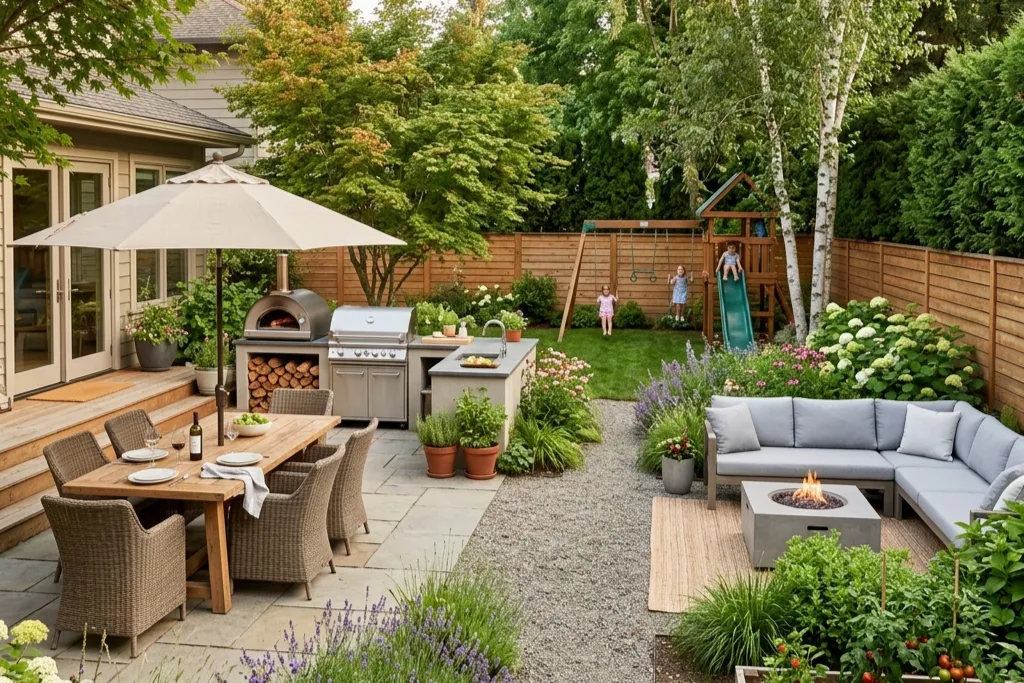
Planning a backyard layout that avoids dead space starts with giving every area a clear purpose and arranging it around how people move. Many yards miss that step. Good backyard layout planning helps you use more of your yard, instead of ending up with corners that never get used.
It’s a problem we come across regularly. Most Brisbane homeowners have plenty of outdoor space but still struggle to use all of it. Usually, poor flow and forgotten areas leave whole sections sitting idle.
So, this article will share ideas for how to read your yard, create functional outdoor zones, and choose design features that keep every section working for you. Let’s take a closer look.
Why Most Backyards Have Space Nobody Uses
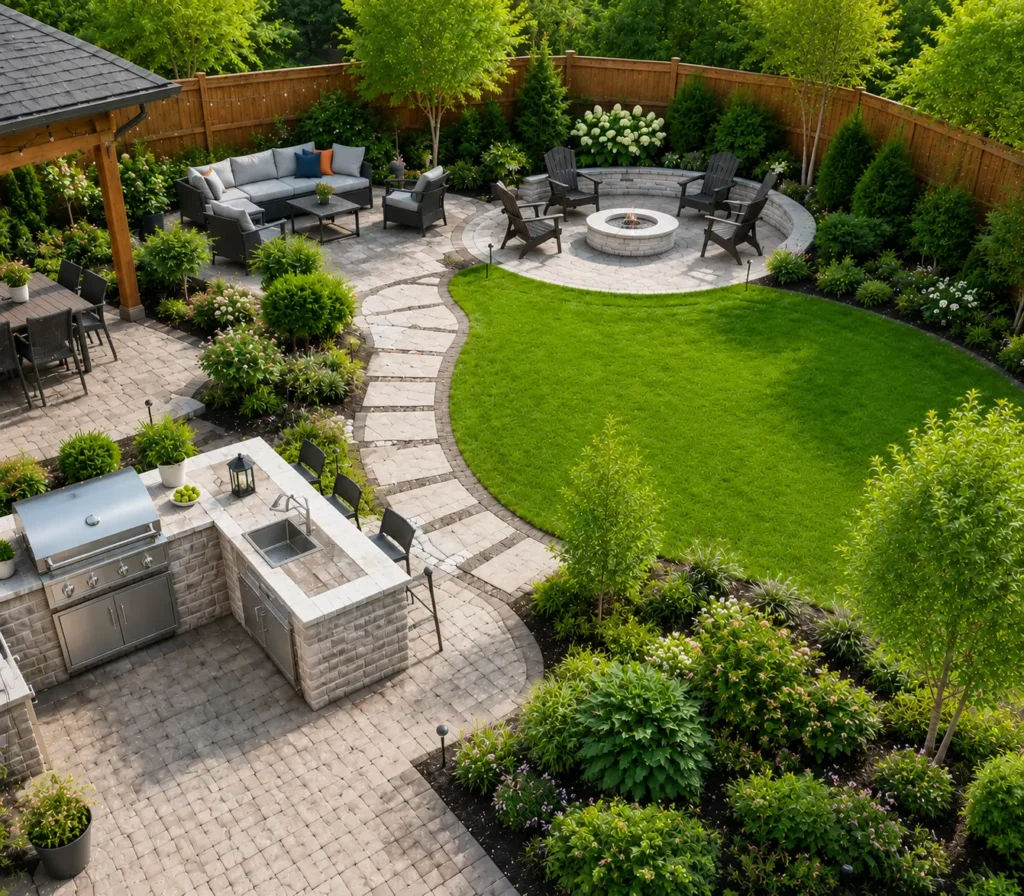
Most dead zones come from placing features where they fit physically, rather than where people need them. In practice, a fire pit lands in one corner, and an outdoor kitchen follows. The areas between them get left behind without a second thought.
It’s a bit like arranging a room entirely around one oversized sofa, where everything else is pushed to the edges and stays there. And Livingetc backs that up in their piece on outdated garden layouts, noting that the space between features rarely gets any attention during planning.
One Paddington homeowner we worked with had a beautiful fire pit area and a brand new outdoor kitchen. Nobody touched the strip of lawn between them, not once. That’s why we say you should read the yard before anything goes into the ground.
How to Read Your Outdoor Space Before You Design It
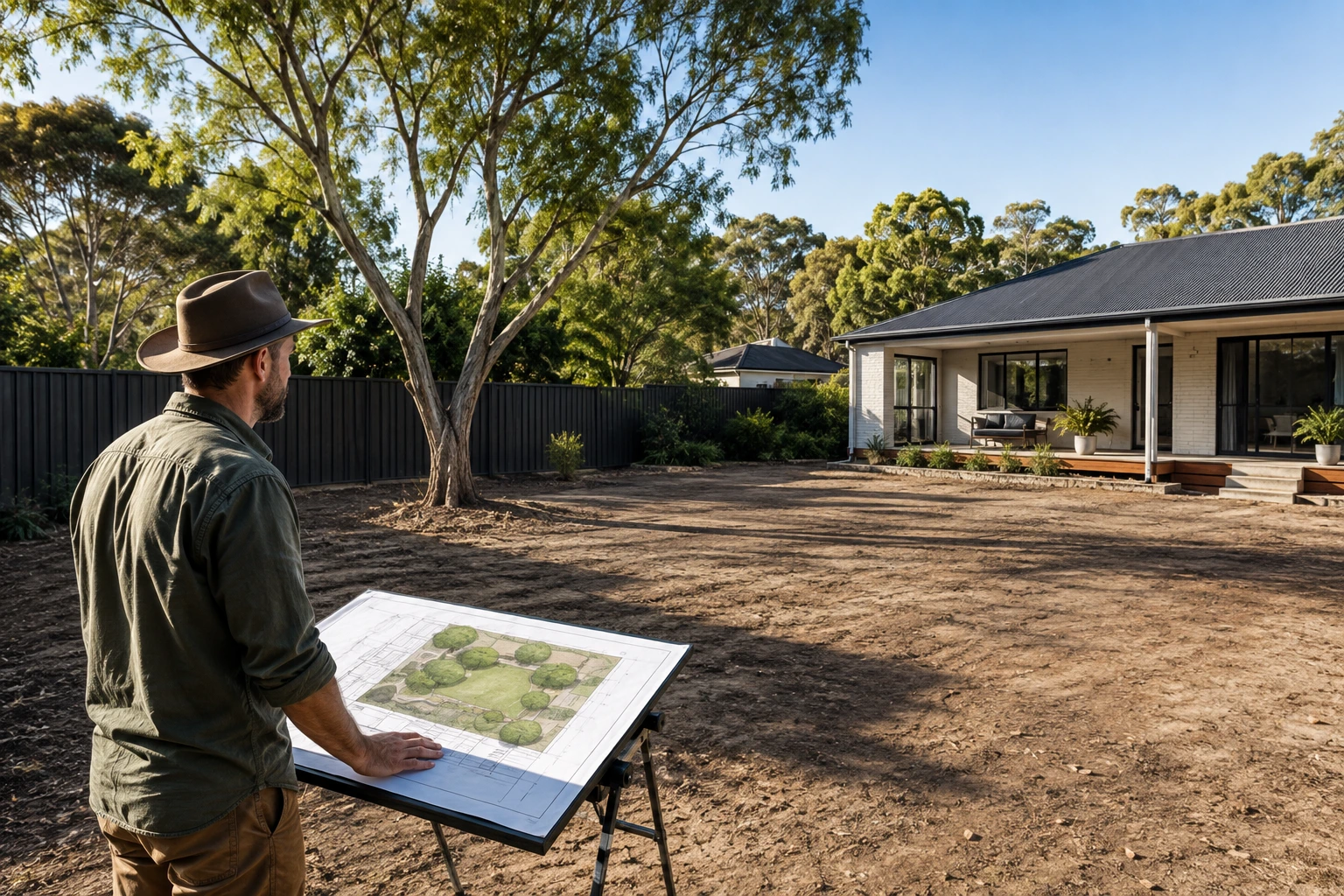
Reading an outdoor space means looking at where the light falls, where people walk, and how the ground sits. Those three things tell you more than any floor plan.
One walk through the yard at different times of day shows you all three:
1. Sun, Shade, and Where They Land
Brisbane gets strong sun year-round, which drives most outdoor design decisions. For instance, a seating area needs enough sun in the morning but shade by the afternoon, or it’ll go unused by January. Dappled shade from an existing tree, though, is one of the best starting points a yard can offer.
Pro Tip: A quick walk in the morning, midday, and late afternoon shows you where the sun hits hardest and where shade naturally settles. That one hour of observation tells you more about your yard than any design plan.
2. Your Yard’s Natural Traffic Lines
People naturally take the shortest route through a yard, and the worn grass shows where that is. A layout built around those lines feels intuitive, and people move through the space without thinking about it.
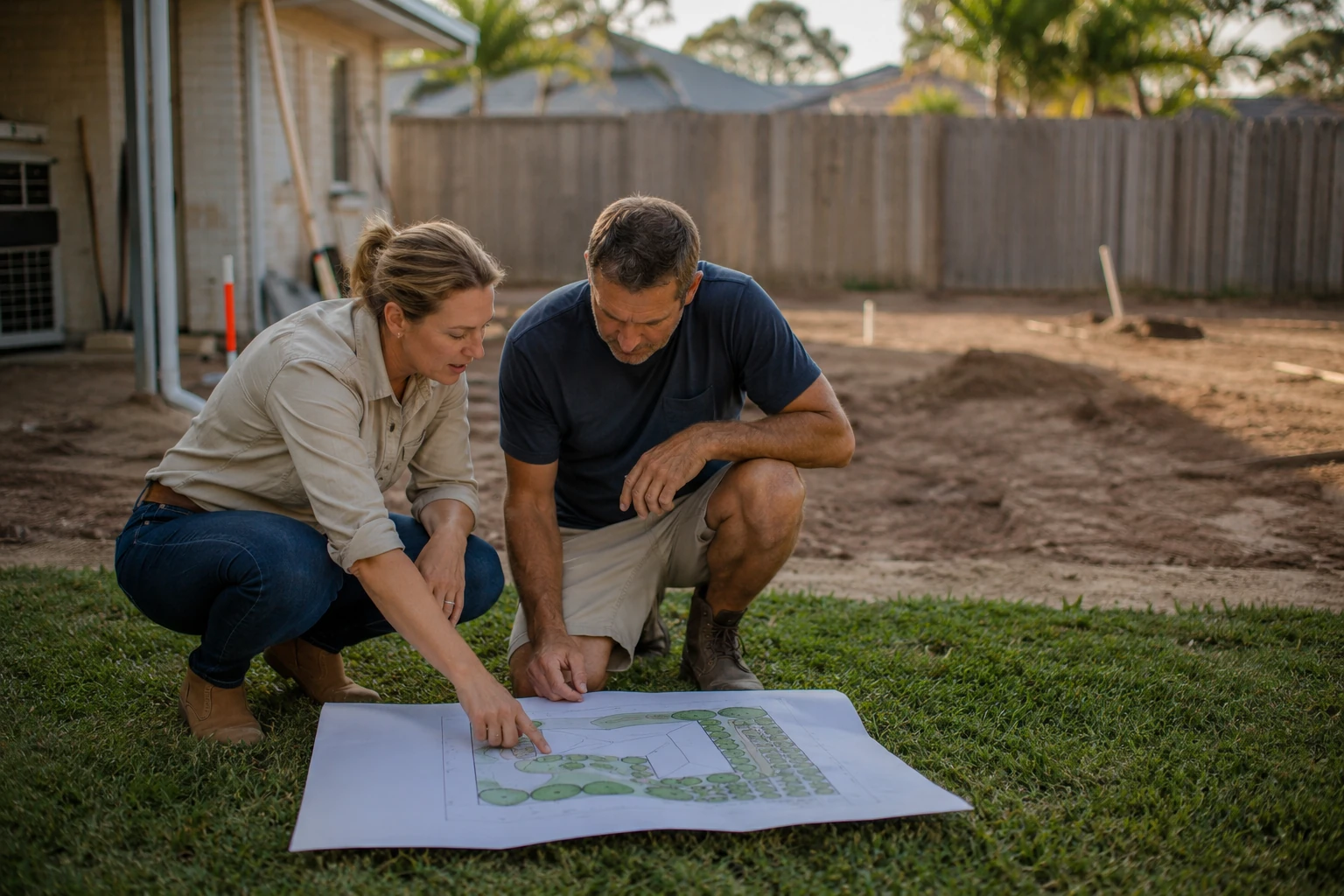
That’s why sketching those lines on graph paper before finalising any layout saves a lot of rework. A simple birds-eye sketch showing where people move, pause, and turn is enough to shape the whole layout around real behaviour.
3. Look at How Your Own Landscape Sits and Slopes
Brisbane blocks are rarely flat, and slope influences nearly every outdoor design decision in a yard. A sloped section left out of the planning stage consistently becomes dead space because there’s no flat ground for zones or furniture to anchor to.
Soil type also determines where a retaining wall will do the most work, since poorly draining ground builds pressure that shifts where support is needed.
As the Australian Plants Society notes in their designing your native garden guide, analysing slope, soil, and drainage comes before you make any landscape design decisions.
With that picture in mind, the next move is giving every area of your yard a clear job to do.
Outdoor Rooms That Give Every Area a Job
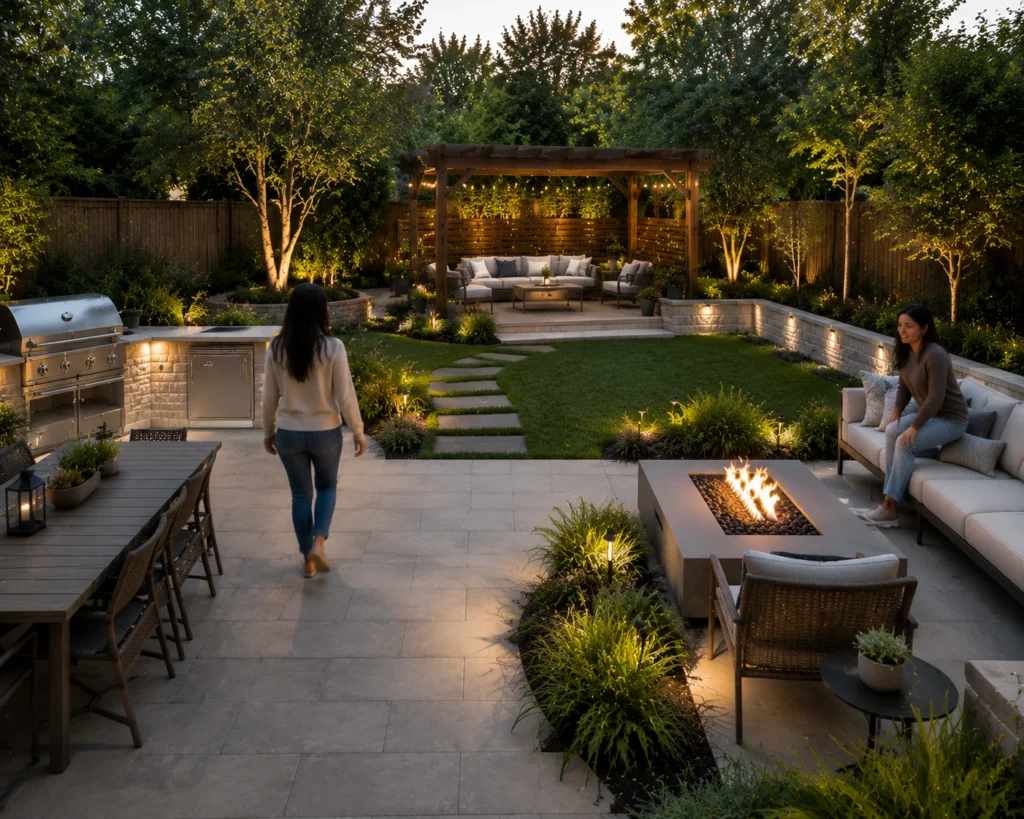
Ever walked into a backyard and instantly knew where to sit? That happens when every area holds a defined purpose, and people can read the space the moment they walk in. A zone without a purpose is a room people walk past (we see these unused zones on nearly every site).
Three zones come up in almost every Brisbane backyard we plan:
- Zone Without a Clear Purpose: Adding plants or furniture to an undefined zone rarely helps. People avoid spaces that send no clear signal about what to do there, and the only fix is assigning a specific purpose before anything else goes in.
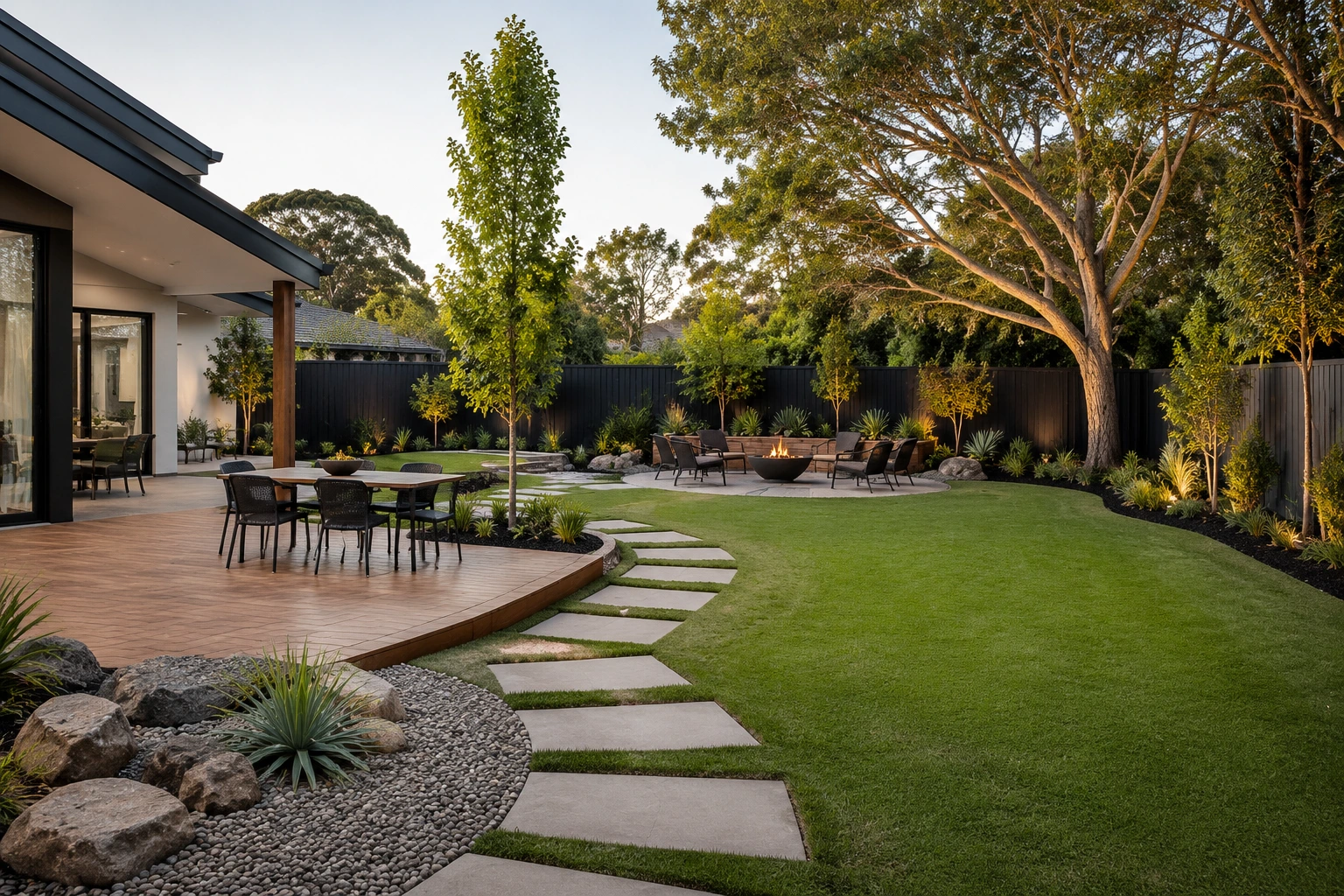
- Fire Pit Zone: There is a reason fire pits have a space in every well-used Brisbane backyard. The seating naturally arranges itself around the flame, the zone defines itself, and people gravitate toward it without being told to.
- Outdoor Kitchen Zone: A yard without a centre point drifts. An outdoor kitchen fixes that by giving the layout an anchor that pulls indoor and outdoor spaces together naturally. Cooking, dining, and socialising happen in one spot, and the separate spaces around it fill in as a result.
A yard that covers all three zones rarely has dead space. Each zone draws people toward it, and the areas between them get used naturally as circulation space rather than sitting empty.
Garden Design Features That Stop Dead Zones From Forming
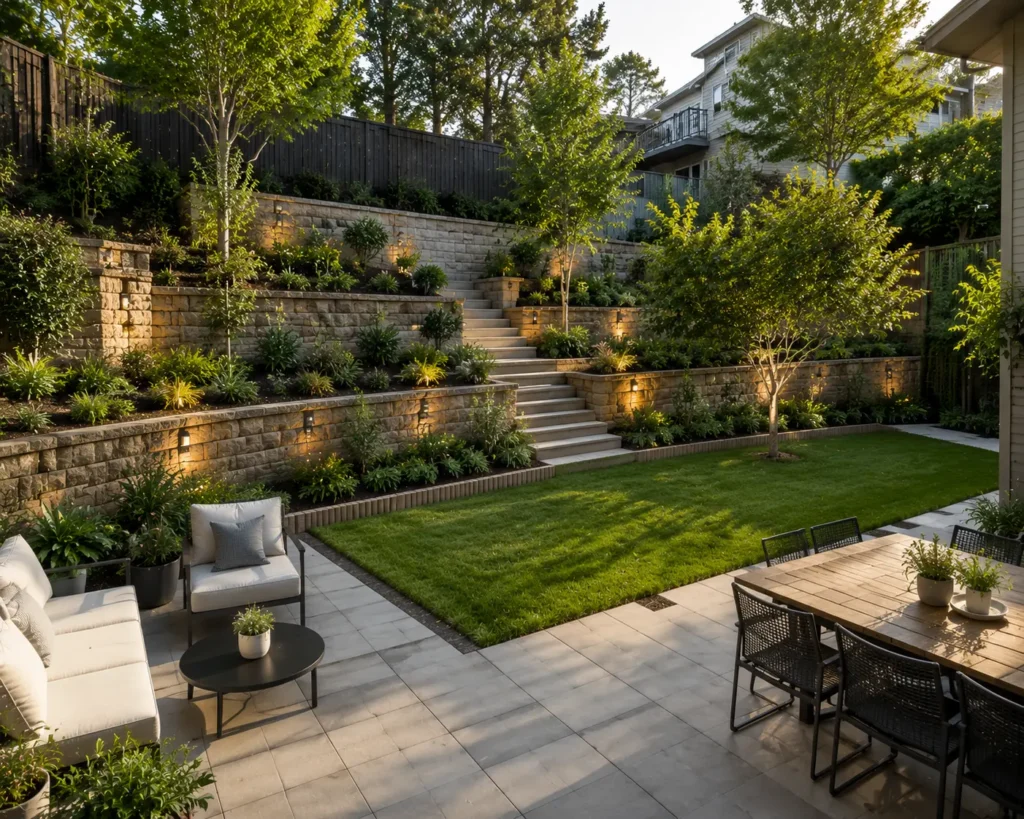
The features you choose for the in-between areas tell you a lot about how complete your outdoor living space will feel. After working on gardens across West End, New Farm, and Kangaroo Point, we’ve learned that those gaps need the right features to close them. The right choice depends on what the space calls for.
In sloped Brisbane yards, retaining walls are often the first gap-filler worth considering. They cut into a slope and create flat ground, and garden beds along the base give that new ground a purpose straight away. The combination of both is something Bunnings covers well in their landscaping for any size backyard guide.
On flatter ground, tall plants along a fence line create a natural boundary between separate zones. No concrete needed. From there, a water feature in a leftover corner gives that space a focal point, and that one addition stops the area from feeling like an afterthought.
We’ve rebuilt Paddington’s side passages using a retaining wall, vertical planting, and a narrow patio. Those three things turned dead corners into usable outdoor areas.
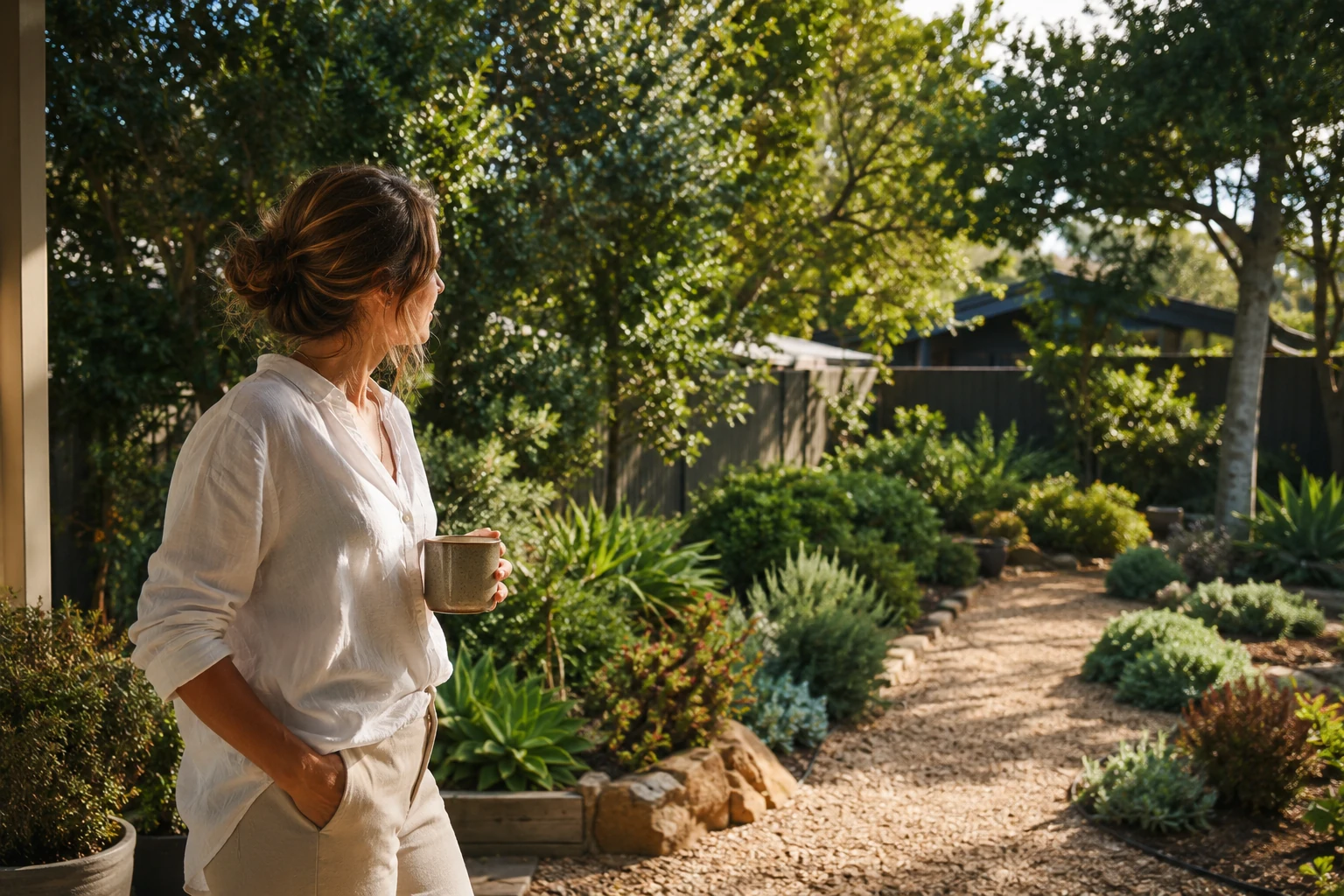
Native plants suited to the local environment work well in spots like these because they are already adapted to Brisbane’s soil, rainfall, and heat. That adaptation means less intervention overall, and a sustainable landscape that largely looks after itself year-round.
Your Backyard Has More Potential Than You Think
Every unused corner in a Brisbane backyard is a planning problem waiting to be solved. Every Brisbane yard has unused corners with a practical fix waiting. And that fix always starts with reading the space, zoning it clearly, and giving every area a defined purpose.
As we’ve mentioned in this guide, choosing the right features is what makes a backyard work. Most Brisbane yards just need those steps applied once, in the right order.
For Brisbane homeowners ready to get those steps right, Design Martus plans outdoor spaces that get used every single day. Our team is with you through every step, from reading the site to finalising the layout.