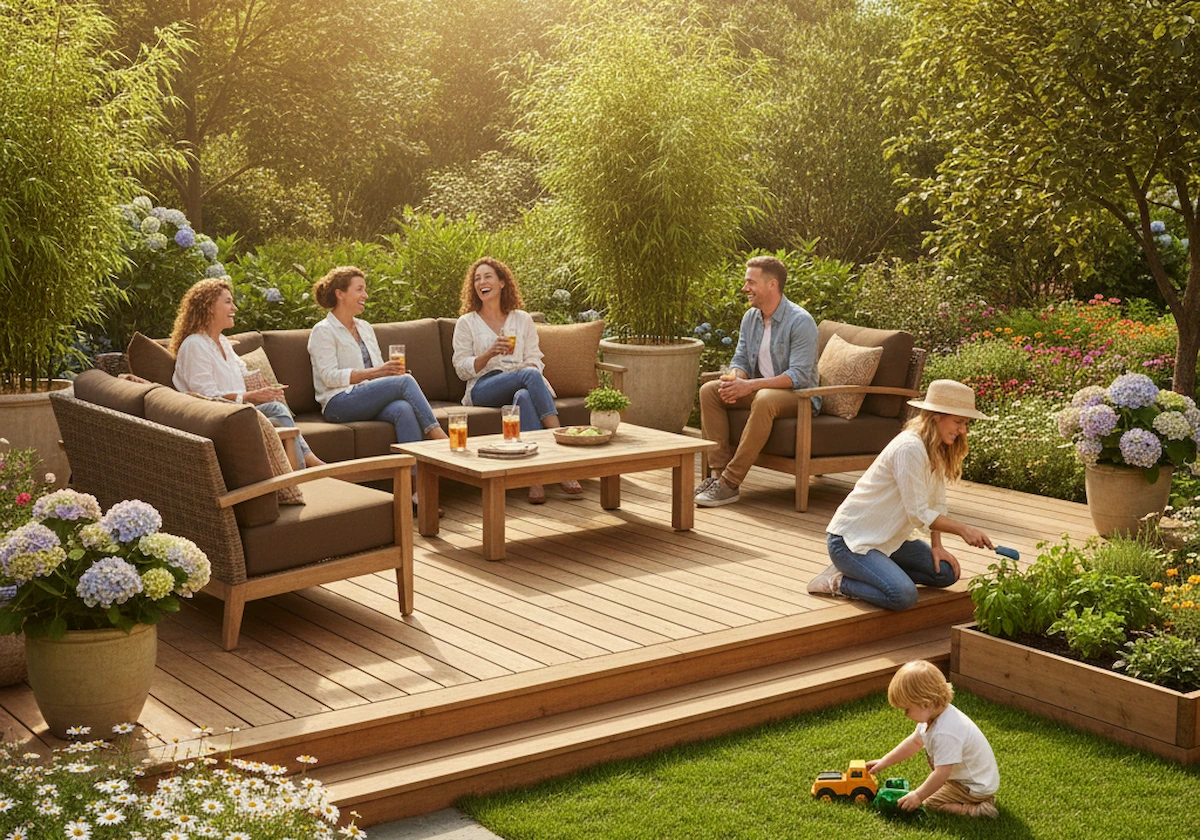
Mississippi State University Extension notes that design and installation costs for built landscapes typically average around 10% of property values. For a typical Brisbane home, that’s around $30,000 to $50,000 going into your outdoor space.
However, the frustrating part is that most of that money gets wasted because nobody thought about where people would actually sit or how the family moves through the yard.
This article shows you how to measure your property before buying a single plant. You’ll also learn where to position raised garden beds and the difference between layouts that only look good in magazines versus those that actually get used on occasion.
Let’s find out how to build the perfect garden layout for your lifestyle.
Why Garden Layout Ideas are Important
A garden layout decides whether you’ll use the backyard or just let it collect leaves for six months straight. If your garden has poor planning, you end up avoiding certain areas because the pavers get too hot in summer, or you never sit on that expensive outdoor furniture because it’s positioned in full western sun at 4 pm.
Meanwhile, a good garden design saves you from ripping out plants you put in the wrong spot. We’ve often seen it happen when people get excited at the nursery and forget their yard floods after rain.
In fact, proper zones can make your outdoor space feel more spacious. With zoning, you basically separate your sitting area from your vegetable garden and keep the lawn away from delicate plants. That way, each section gets room to breathe instead of everything competing for attention.
Starting With Your Outdoor Space
Planning your outdoor space on paper saves you from digging up plants later. Before you touch a shovel, taking time to understand your backyard sets the base for how usable it becomes.
Here’s where to start for a useful garden layout.
Measure Before You Dream
Begin by sketching your property, including the house, shed, trees, and any paved areas that are already there. Then measure the doors, windows, and outdoor taps so you know where water reaches without dragging hoses across the lawn.
Having all the measurements on graph paper gives you room to experiment with different garden designs without committing to anything permanent.
Sun Patterns Change How Plants Grow
Noting where the sun hits throughout the day helps you choose plant locations. Brisbane’s intense afternoon sun can burn plants that only need morning light, especially natives that prefer cooler conditions.
We’ve built gardens all over Brisbane’s inner suburbs, and afternoon sun always surprises new homeowners with how intense it gets between 2 pm and 5 pm. Which is why shade areas work perfectly for sitting zones during summer months when you want to be outside without melting.
Foot Traffic Through Your Garden
Paying attention to how people naturally walk through your yard will stop your garden beds from becoming obstacles instead of ornaments. Yes, that will work, for sure. It’s because, often, kids and pets create worn paths, which show where plants won’t survive even with your best efforts.
Pro Tip: Position raised beds away from main walking routes so they last longer than a single season.
Raised Garden Beds vs Ground-Level Planting
Should you build up or dig down for your vegetable garden? The choice between raised beds and ground planting affects how much you spend upfront and how your vegetables grow through summer.
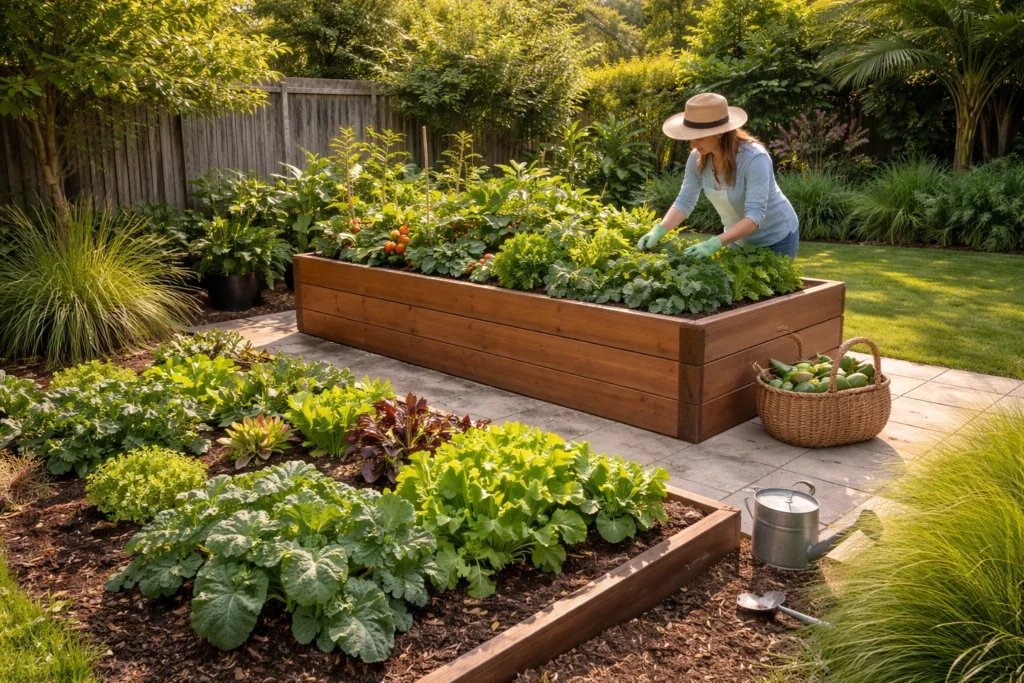
You’ll understand when you take a look at the reason people pay extra for raised beds:
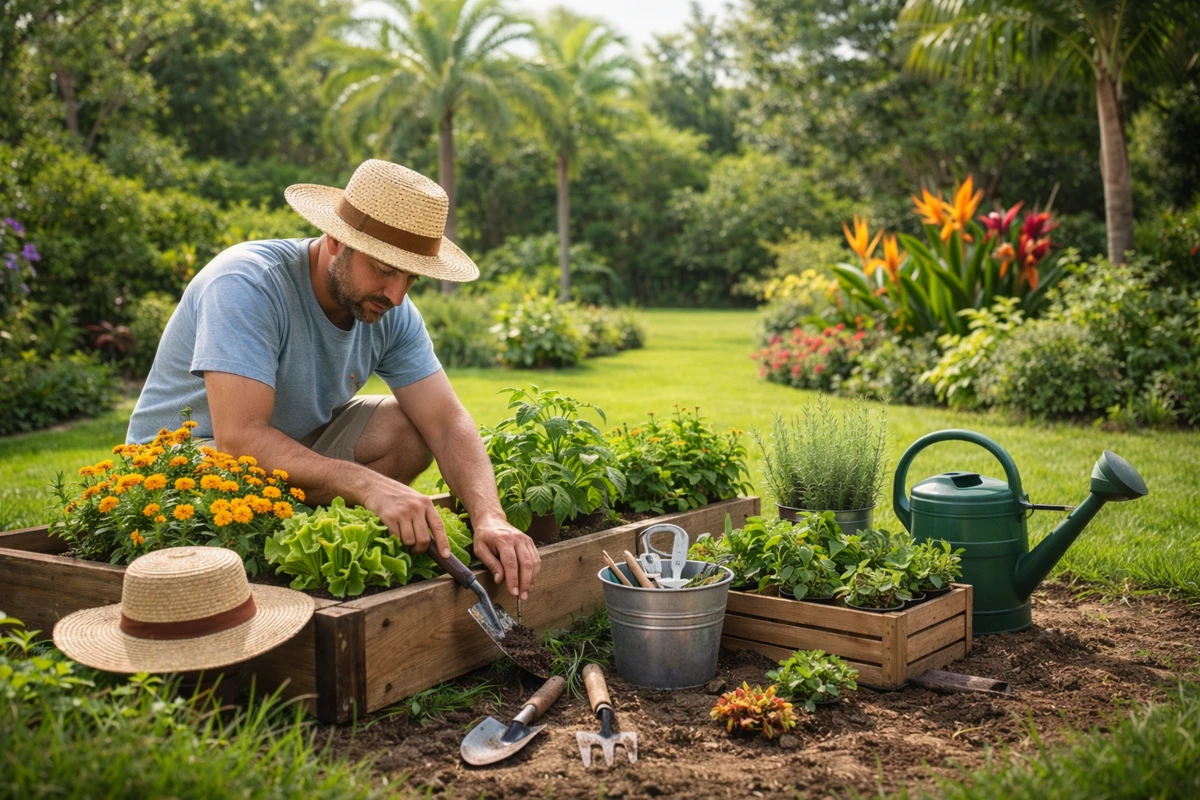
- Fresh Start with Quality Soil: Raised beds let you skip Brisbane’s clay entirely and fill them with a quality mix that drains water properly. Vegetables need loose soil to develop strong roots, and raised garden beds give you that from day one.
- Upfront Cost Vs. Soil Quality: Working at ground level means using what’s already there, which cuts out the cost of extra lumber or soil mix. But the trade-off is that you have to deal with compacted ground that most vegetables struggle with.
- Better Drainage After Storms: Our heavy summer storms can leave ground-level gardens waterlogged for days. Meanwhile, raised garden beds drain faster because they sit above the water table, which keeps roots healthier.
- Save Your Knees And Back: Raised beds sit at knee height or higher. So you’ll spend less time stooping and kneeling when you’re planting, weeding, or picking vegetables every weekend.
Most Brisbane gardeners who switch to raised beds wonder why they didn’t do it sooner. The combination of better drainage, healthier soil, and less physical strain makes the benefits hard to ignore.
Climbing Plants and Garden Design
Growing plants vertically frees your ground space for seating areas or more plants. Most Brisbane backyards have plenty of vertical space going to waste while everyone crowds plants into garden beds at ground level.
Take a look at some vertical gardening ideas:
- A-Frames And Trellises: Flat yards benefit from vertical structures that create visual interest. For example, a simple bamboo frame costs almost nothing while supporting pole beans or cucumbers through the growing season.
- Shade Underneath For Delicate Plants: Climbing plants provide natural shade for leafy greens during hot months. Like, lettuce and spinach bolt in direct Brisbane sun, but they thrive under a canopy of beans or passionfruit vines.
- More Vegetables In Less Space: When you grow plants upwards instead of out, you can fit tomatoes, cucumbers, and pole beans into a small space that would otherwise hold maybe three plants. This way, the growing space multiplies without needing to expand your garden beds.
Vertical gardening works especially well in narrow side yards or against fences where ground space is limited, but height isn’t. In fact, a single vertical garden tower can hold 50-60 plants, which extends how much you can grow in a tiny footprint.
Now that you know how to arrange plants, let’s map out your garden zones.
Creating Zones in Your Backyard Design
Through our work on residential properties around Paddington and New Farm, we’ve learned that separate zones make people spend more time outside. The secret is giving each zone a clear purpose so that nothing competes for the same spot.
Here’s how you can section out your backyard.
The Sitting Zone for Rest
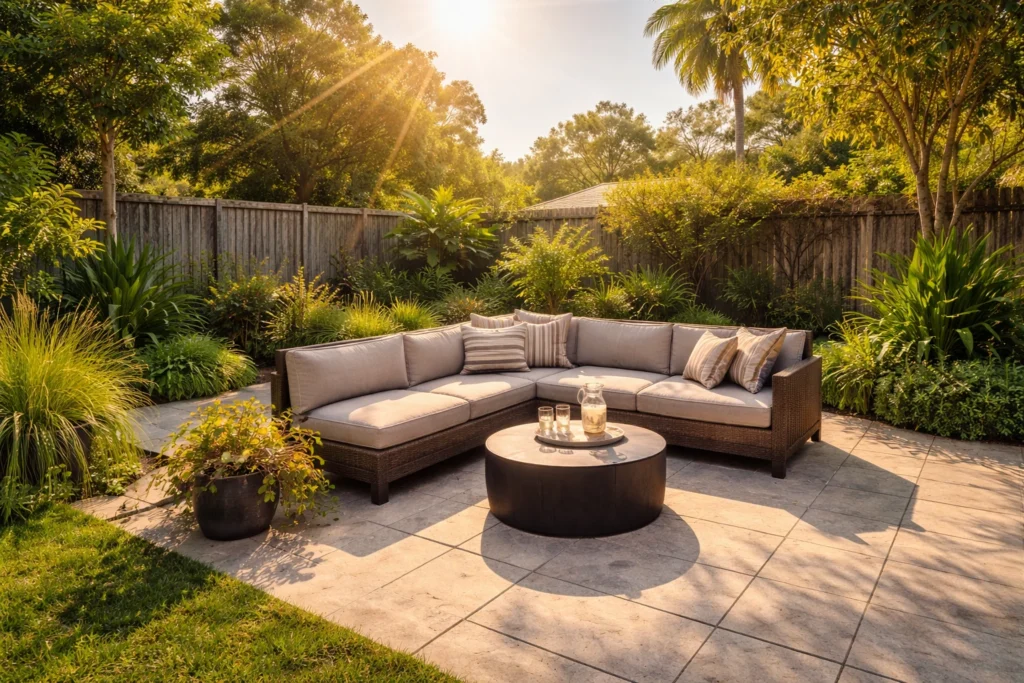
Seating tends to be most comfortable in spots that get morning sun and afternoon shade. Hard surfaces like pavers usually work better than grass for placing furniture. That way, chairs won’t sink into mud after rain, and the lawn underneath stays healthier.
Pro Tip: Position this zone near the house so you’ll access it easily from indoors. The closer your sitting area is to the kitchen, the more often you’ll carry your coffee outside on Saturday mornings.
The Play or Lawn Zone
Open grass areas need full sun and good drainage for kids or pets. We suggest keeping this zone separate from delicate garden beds and vegetable patches so nobody tramples your tomatoes during backyard cricket.
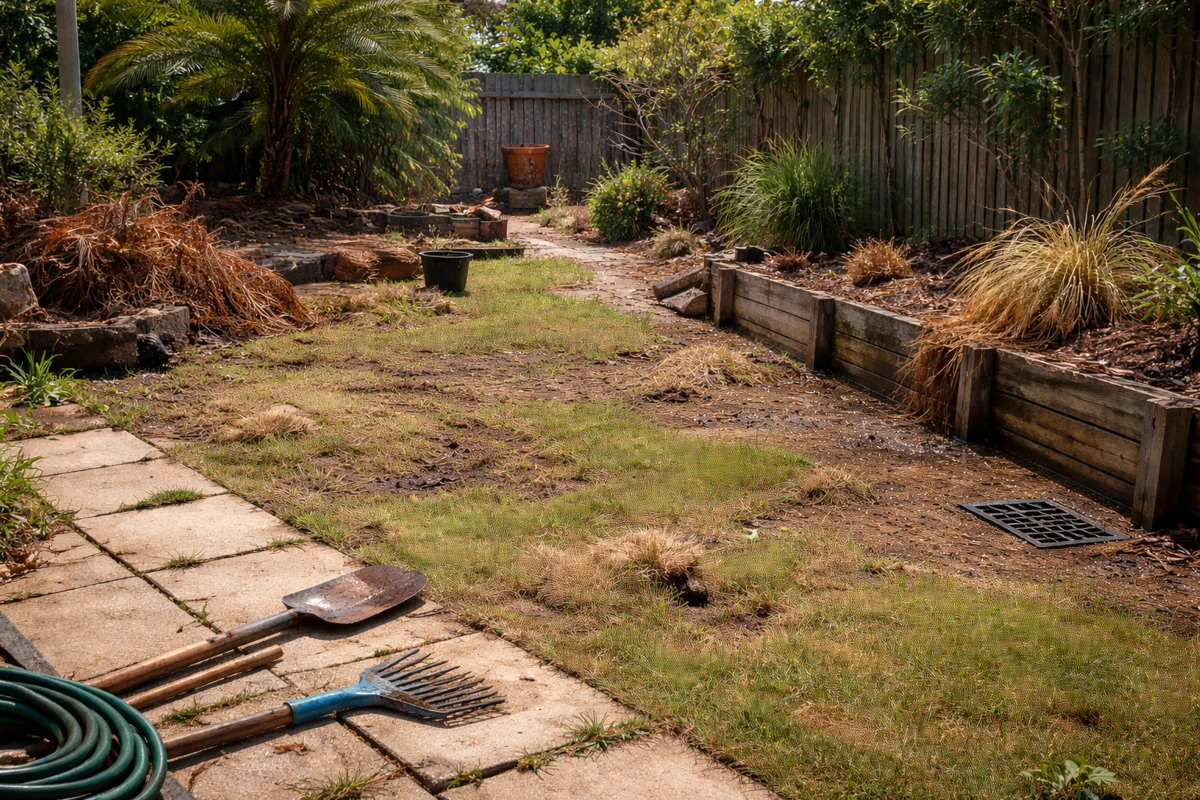
Another issue to note is that South Brisbane clay soil needs prep work before the lawn grows properly. For that, mix in gypsum and coarse sand to break up the clay, or you’ll end up with bare patches and compacted ground that becomes mud every time it rains.
Landscaping Features That Add Real Value
Think about it. When was the last time you spent a full evening in your backyard instead of heading inside after twenty minutes? The right landscaping features can change that and make you spend more time outdoors.
Feature areas include things like water features, sculptures, or specimen plants that catch your eye. These landscaping features have the most impact when placed where they can be seen from inside the house, rather than tucked away in a corner that often goes unnoticed.
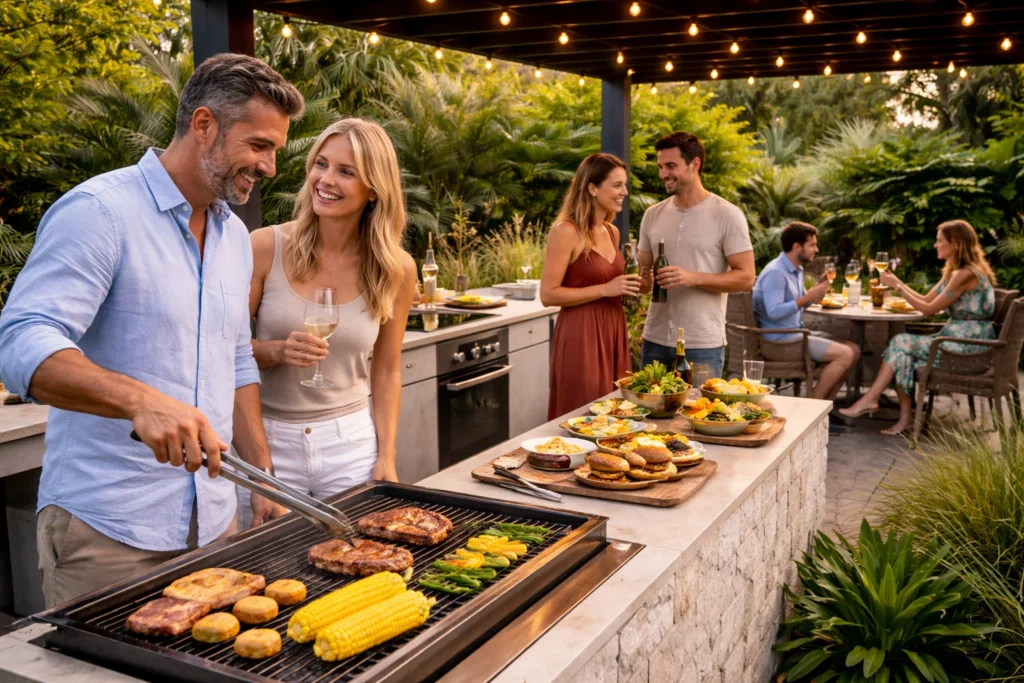
Plus, outdoor kitchens and built-in seating make you use the space more often because everything’s already set up. You’re not dragging chairs from the shed or running inside to grab plates.
Meanwhile, garden lighting extends how long you can stay outside after sunset, which is important in Brisbane, where summer evenings are the best part of the day. Similarly, Water features and raised planters become focal points you’ll see from indoors.
Good landscaping like this also creates covered areas where you can sit during light rain without getting soaked. These design features feel essential once you have them, not like fancy extras you could skip.
Pro Tip: Use lighting to highlight these spots at night when you’re entertaining. A well-placed spotlight on a feature tree or water fountain makes your garden feel intentional rather than randomly planted.
Make Your Backyard Work For You
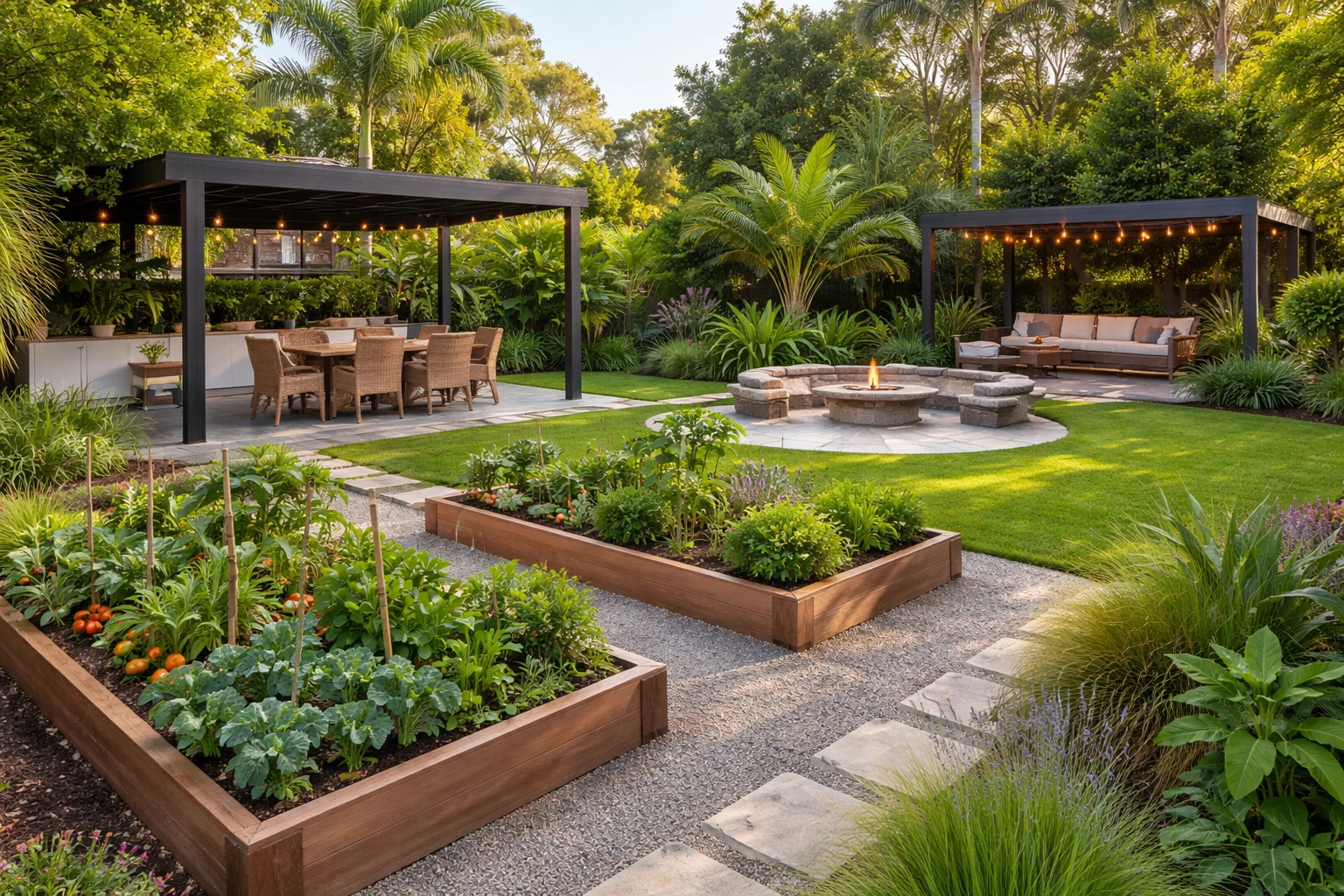
Good garden layout separates your outdoor space into zones for sitting, growing, and enjoying. To get the most out of your garden, start by measuring your yard and tracking sun patterns before buying plants or materials that might end up in the wrong spot.
Taking the time to plan ensures each area serves its purpose and feels inviting. This thoughtful approach will save you much effort and frustration down the line while also making your garden a space you truly want to spend time in.
If you’re ready to design outdoor landscaping for our subtropical weather, Design Martus can help. We’ll create functional zones that match how you live and what grows here in the neighbourhood.