Ever look at your garden and think about all the weekend hours it steals from you? Let’s be honest, a low-maintenance garden balances how it looks with how much work it needs. Well, you can do it too by choosing plants and layouts that don’t demand constant attention.
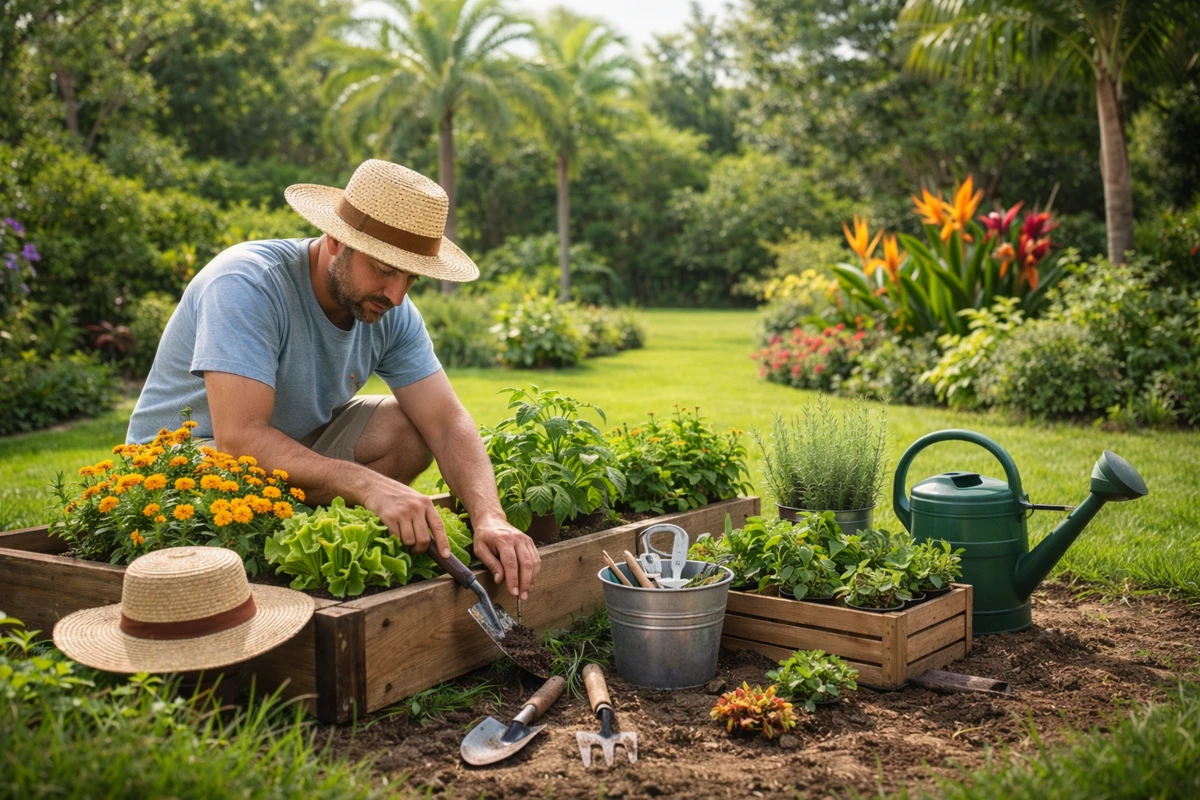
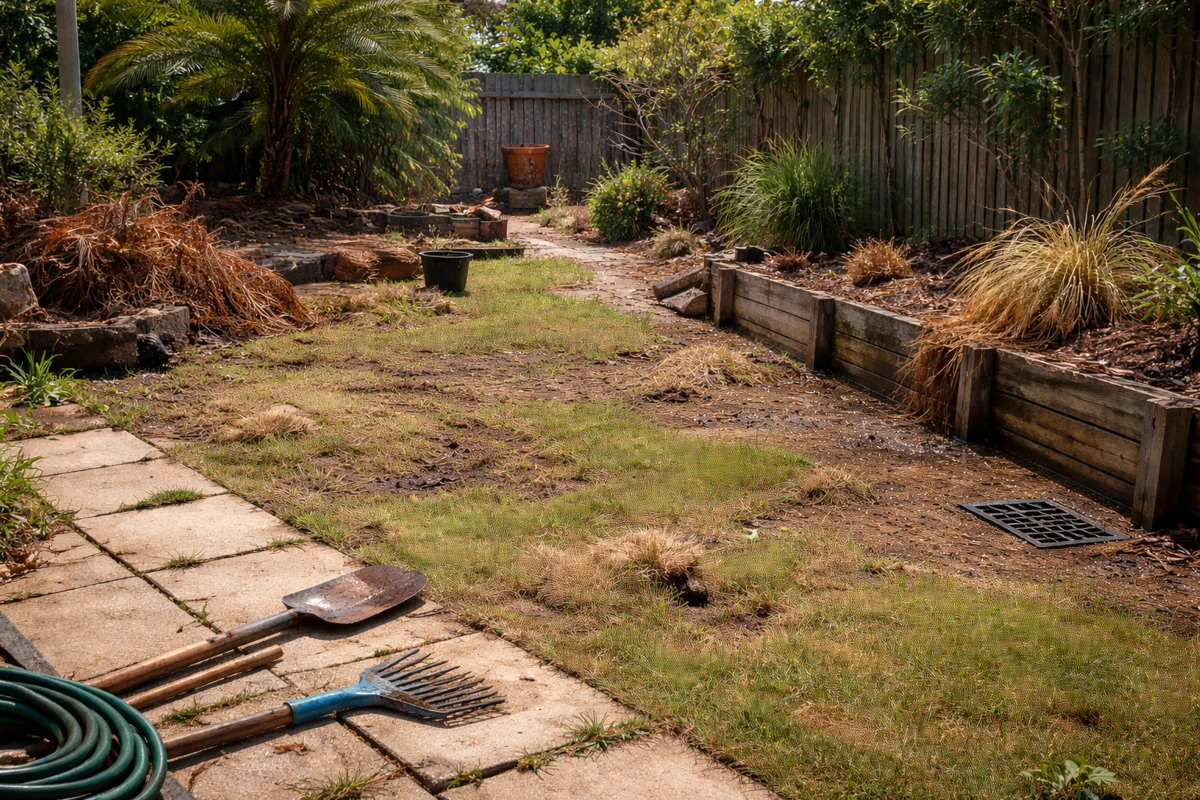
We get it, after spending over 20 Saturdays a year behind the lawn mower or pulling weeds, you simply want a break. And this cycle happens because of how the garden was set up in the first place.
Don’t worry, though, we have your back. In this guide, we’ll cover planning your space, picking native plants based on climate, reducing lawn areas, and creating modern garden styles.
Let’s dive into it.
Why Low-Maintenance Garden Design Starts With Planning
Building a low-maintenance garden design starts with understanding and planning. Why? Well, from our work with Brisbane homeowners over the years, we’ve noticed that strategically planned gardens need way less maintenance than those designed purely for looks.
But be careful, as you might end up with gardens that need constant weeding, pruning, and replanting every season (we’ve all brought plants that looked great at the nursery but turned into weekend monsters).
On the flipside, when you map out your outdoor space based on sun exposure and actual use, you avoid planting high-maintenance areas. Keep in mind that shaded spots under trees need different plants than full-sun areas near fences. And let’s not forget the high-traffic paths that require tougher varieties.
Once you have a plan, grouping the plants by water needs will make irrigation easier. This prevents overwatering some beds while underwatering others. Now the next step is choosing which plants need minimal attention.
Choose Native Plants That Suit Brisbane’s Climate
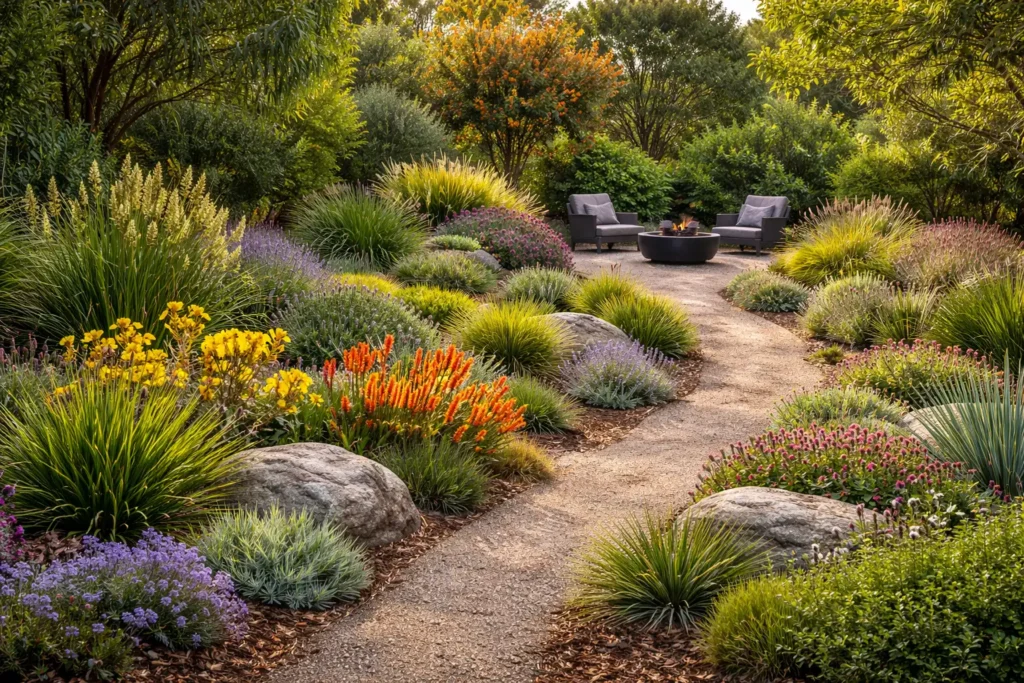
Native plants do most of the heavy lifting for you once they’re established in your garden beds. After all, they’ve adapted to Brisbane’s wet summers and dry winters over thousands of years, so they don’t need constant watering or fertilising.
This is what makes them ideal for low-maintenance gardens:
- Adapted to Local Conditions: Native plants grow well in local soil without added fertilisers. They handle the Australian climate naturally, which cuts down the work needed to keep them healthy.
- Perfect For Subtropical Gardens: Frankly, if you’re planting anything needing weekly watering in Brisbane’s summers, you’re making things harder than necessary. Instead, hardy plants like grevilleas, lomandras, and callistemons keep their colour year-round with minimal pruning.
- Wildlife and Water Benefits: Natives attract local birds and use less water than exotic varieties. This cuts your water bills while bringing more nature into your outdoor space.
Choose natives suited to your climate, and you’ll spend less time on garden maintenance.
Garden Beds and Ground Covers That Reduce Upkeep
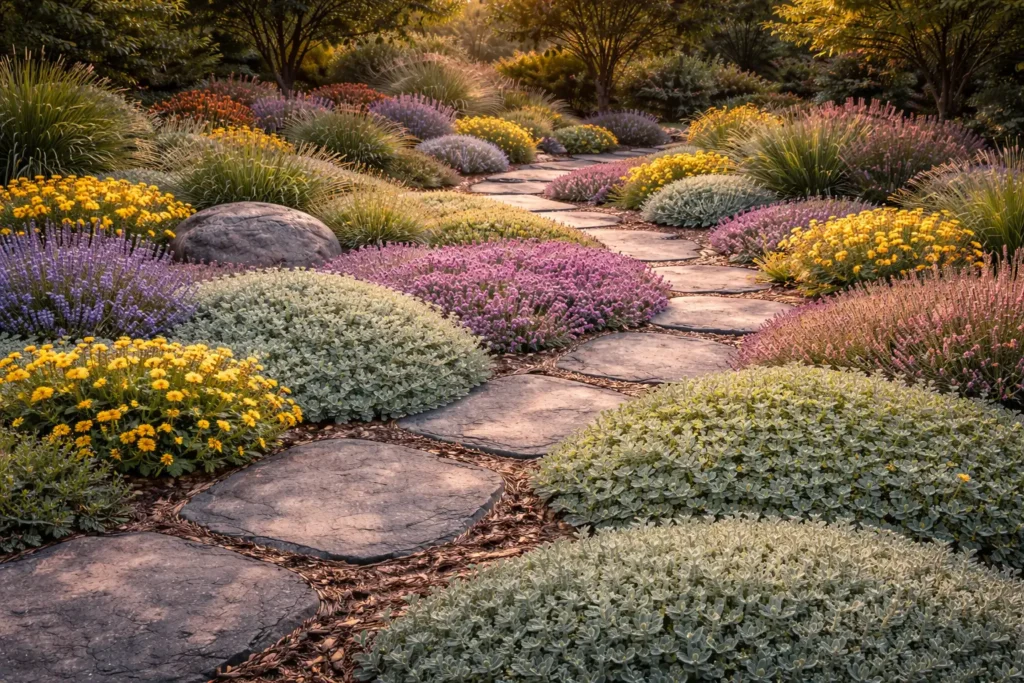
Ground covers are one of the easiest ways to cut down on weeding and watering time. They block light from reaching the soil, which stops weeds before they start. It’s normal to get confused.
Let’s break down where to focus your efforts.
Use Ground Covers To Fill Empty Spaces
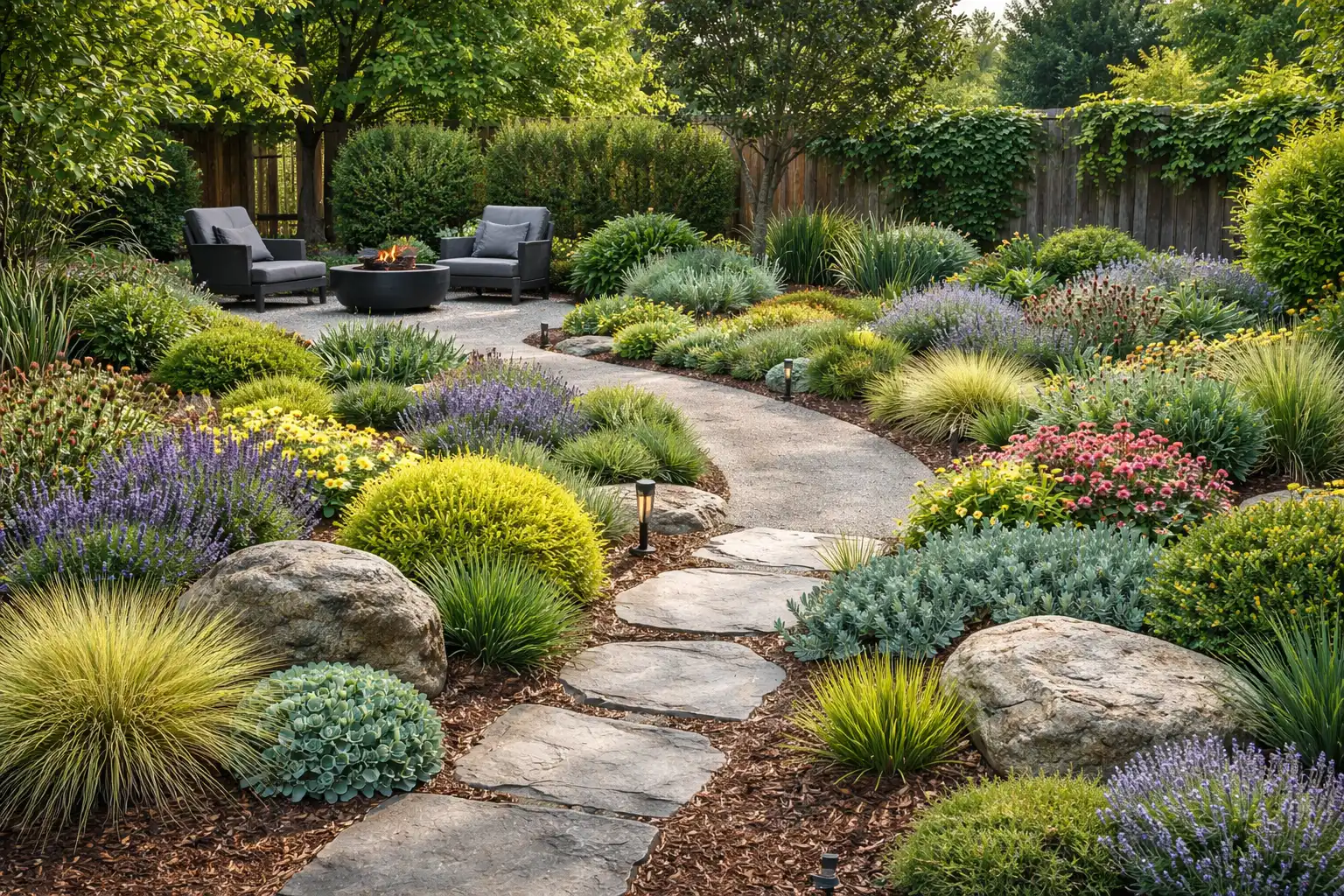
Ground covers prevent weed growth and fill spaces between taller plants by creating a living mulch. As they spread horizontally, they block light from the bare soil. This stops weed seeds from germinating while keeping your beds looking full with greenery (mindblowing, right?).
Layer Bark Mulch In Garden Beds
Did you know that bark mulch retains moisture and stops weeds from taking over beds? A 75mm layer works best, but you’ll need to top it up yearly as it breaks down.
Believe it or not, proper mulch can cut your weeding time by half.
Plant Densely To Crowd Out Weeds
Dense plantings eliminate bare soil that invites weeds (bare soil is basically a welcome mat for unwanted plants). When you plant perennials and shrubs close together, they shade the ground below. This crowds out any weeds trying to establish themselves.
To sum it up, dense planting does the work for you.
Now that your beds are sorted, let’s talk about the space that eats up the most weekend time.
Rethink Your Lawn Areas for Less Mowing
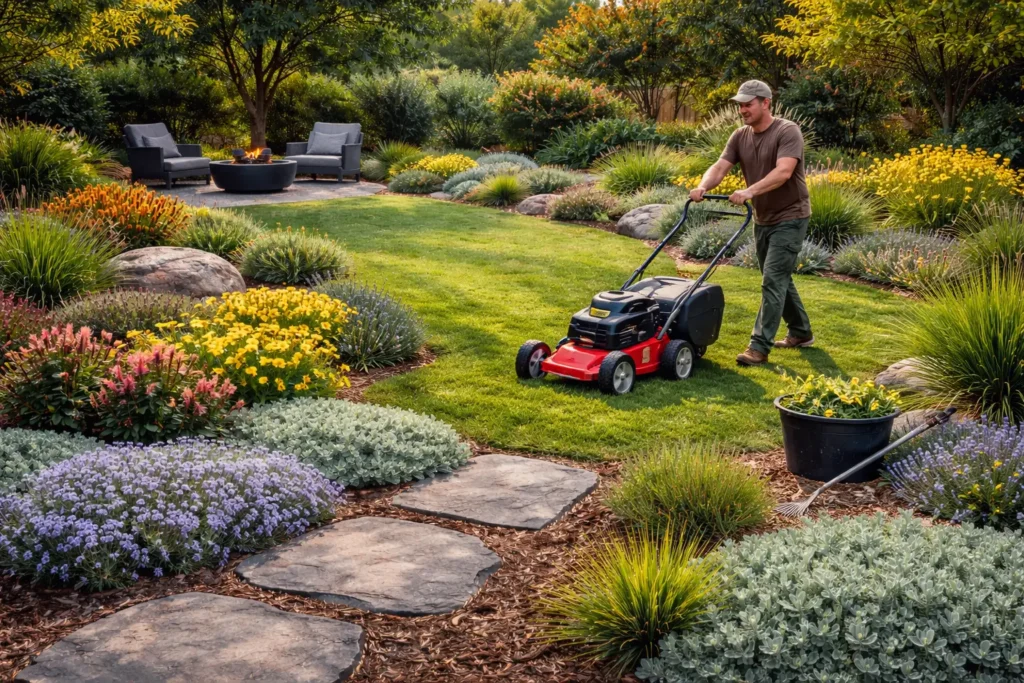
We bet you mow your lawn more than simply walk on it every week. Large lawn areas demand weekly mowing and constant edge trimming. If you’re honest about which sections get used, you can replace the unused bits with native ground covers or garden beds.
Here’s the bonus: ground covers don’t need edging at all. In our projects, we’ve seen clients cut their lawn by half and reclaim their Saturdays.
The benefits add up quickly. Smaller lawn spaces mean less time mowing and lower water bills during Brisbane’s summer restrictions. Besides, when you reduce your lawn to just the areas you use, you end up freeing up weekend time.
With rethinking lawn areas out of the way, let’s discuss modern garden layouts.
Modern Garden Layouts That Simplify Outdoor Space Maintenance
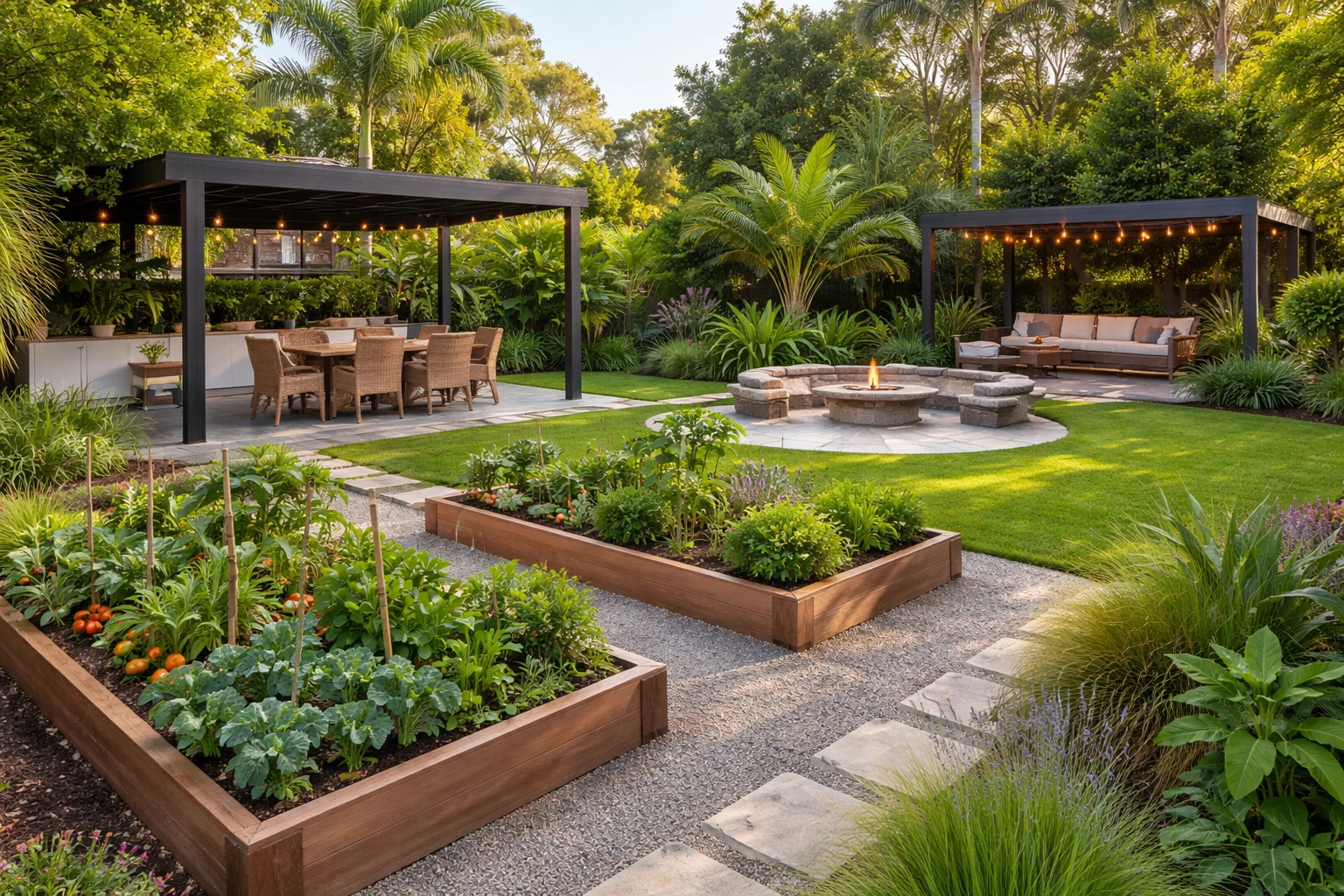
Modern garden layouts focus on fewer plants repeated throughout, which means less variety to manage. Instead of filling your space with dozens of different species, modern design keeps things simple and structured.
So, how do these layouts exactly work? Let’s get into it:
- Clean Lines With Fewer Varieties: Modern garden design uses clean lines and fewer plant varieties overall. When you limit your plant palette, everything becomes simpler to maintain.
- Repeat Hardy Plants Throughout: In our experience designing gardens across Paddington and New Farm, repeating 3-5 plant species cuts maintenance complexity significantly. Adding to that, you learn one pruning schedule and one watering routine instead of juggling different ones.
- Low-Maintenance Hardscaping: Beyond plants, design elements like gravel paths need zero maintenance compared to lawn edges. It’s a fact that gravel doesn’t need mowing or edging. Patio features and paving stones stay looking good with minimal effort, too.
Use these modern styles, and your outdoor space will stay looking good with less work.
Create a Garden That Takes Care of Itself
A garden shouldn’t demand every spare hour you have. For instance, most people design gardens without thinking about long-term upkeep, which leaves them trapped in weekend maintenance. The solution is choosing plants and layouts that work with Brisbane’s climate.
That’s what we’ve covered here. Plan your space around how you’ll use it, then pick native plants suited to our climate. As we mentioned earlier, ground covers stop weeds, and if you reduce lawn areas, it cuts mowing time. Modern design ties these elements together and keeps maintenance low.
Always remember, your weekends are too valuable for constant garden work. Contact Design Martus for expert landscaping advice that fits your lifestyle. Our team will guide you through creating a low-maintenance garden you’ll love.
Let’s get started.