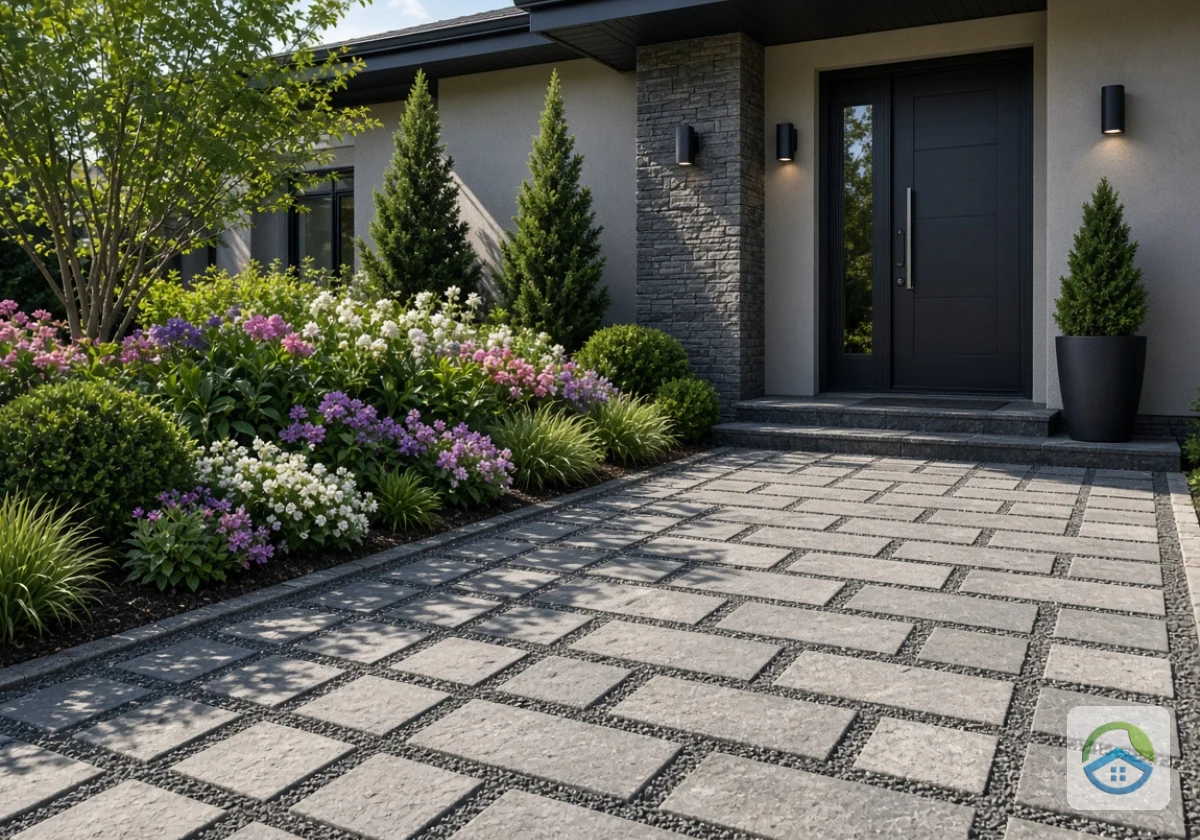
Have you ever seen rain rush off your patio, driveway, or path into the street? That’s the problem permeable paving solves: it lets rain pass through into the ground, where it soaks into the soil or drains to a suitable outlet. When your paving handles stormwater as well as feet and cars, it’s worth planning it alongside your drainage.
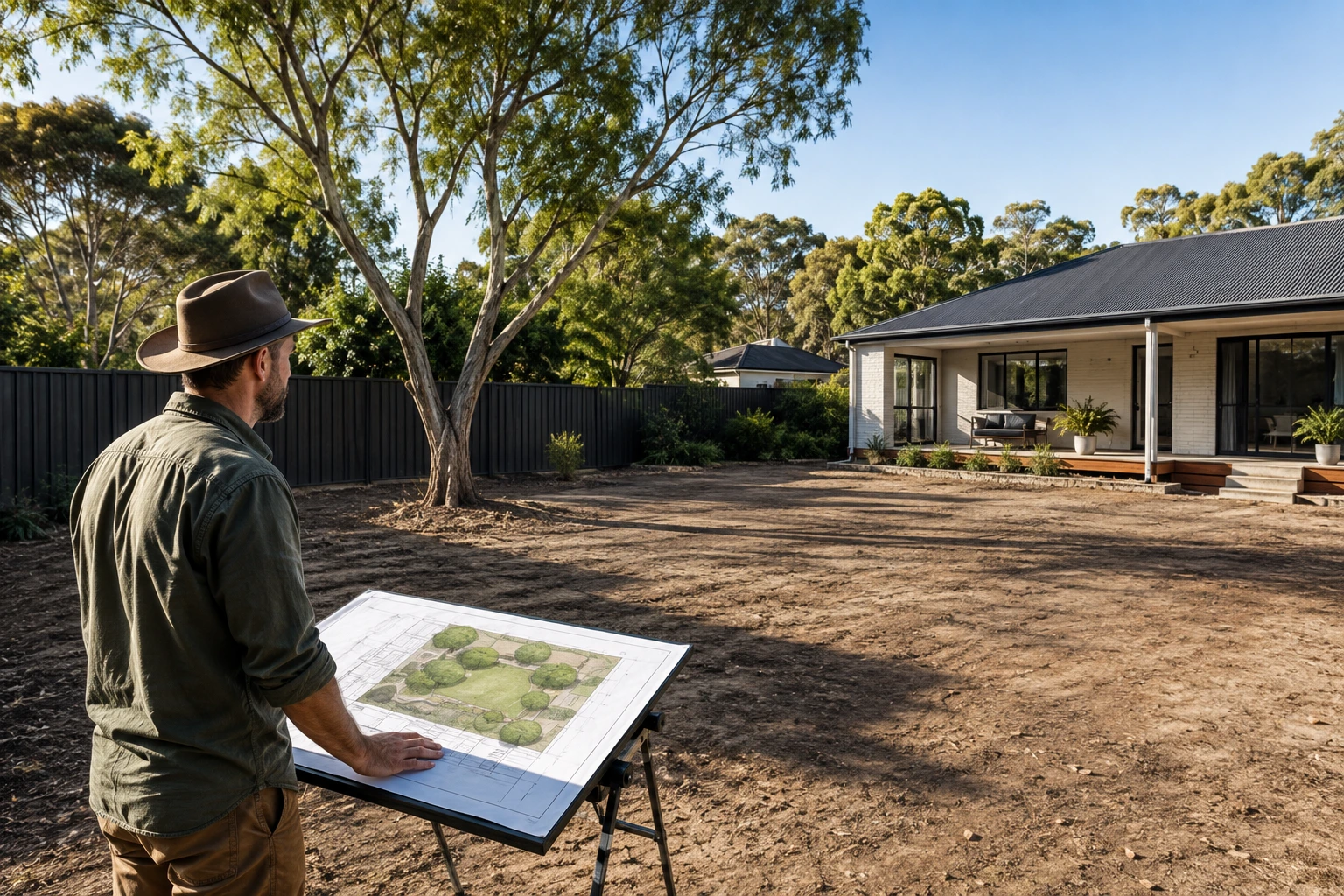
At Design Martus, we plan gardens around how water moves across a block. Paving decides much of where that water ends up, so we treat it as part of the drainage plan.
This guide compares pavers, permeable concrete, resin and gravel, and shows how each works in five common areas of the garden. We’ll finish with the base underneath, which decides how long the job lasts.
First, look at what solid paving gets wrong.
Why Are Homeowners Moving Away From Solid Paving?
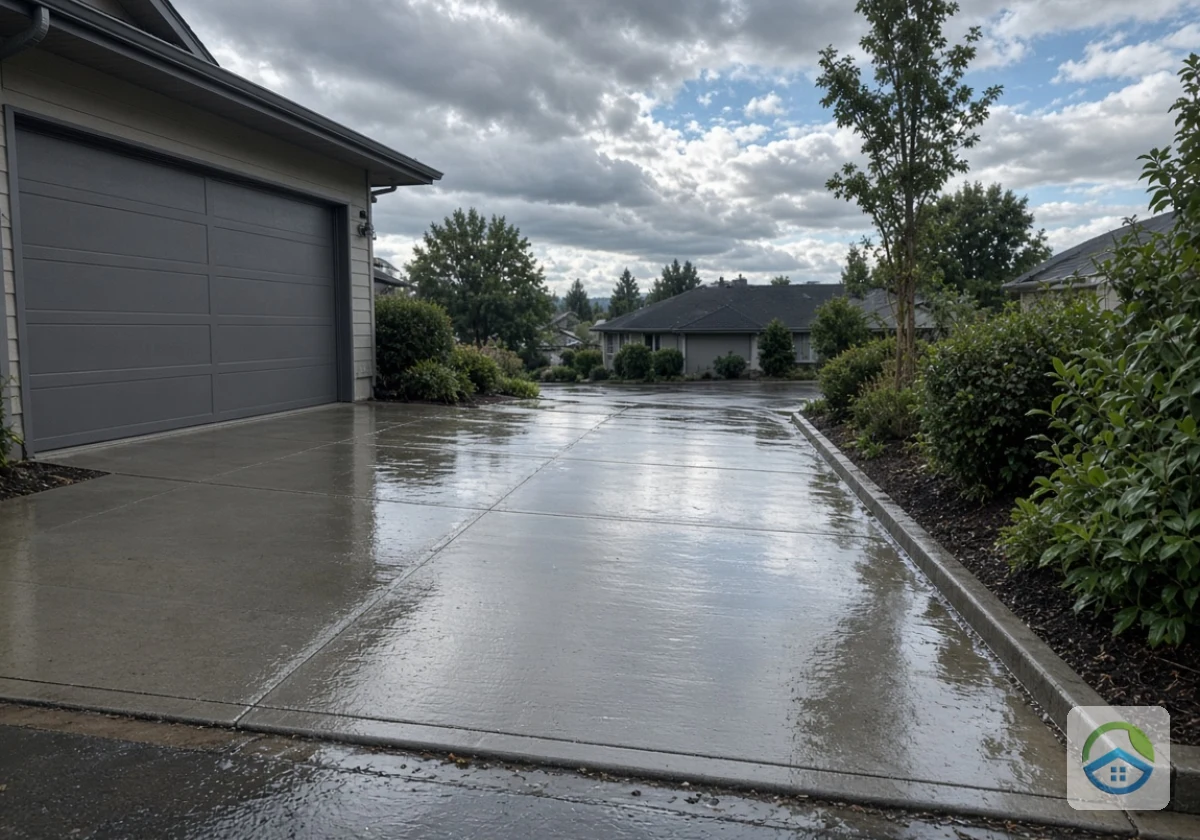
Homeowners are moving away from solid paving because sealed concrete and tight-jointed tiles push every drop of rain sideways. That runoff heads toward the house, the fence line or the street. Inner West Council’s water-sensitive design advice explains that as buildings, footpaths and roads cover more ground, less water can soak in.
Poor drainage also creates problems around the house. A solid driveway with the wrong fall can send a storm’s worth of water under your garage door. Meanwhile, puddles that sit on a patio leave a green, slippery film behind (we’ve watched clients skid on plenty of these surfaces).
The good news is, permeable paving fixes this by letting water pass through gaps, joints or open pores in the surface. Once through, the water drains into a stone base and seeps into the soil. Your trees and lawn get that moisture instead of the stormwater drain. That extra soil moisture helps them through dry spells.
So if you’re planning a full backyard renovation, settle the drainage question before you pick a colour or pattern. In our design work, sorting out where water goes first usually removes the need for extra pits and pipes later.
Permeable Paving Materials: Pavers, Concrete, Resin and Gravel Side by Side
Each permeable material handles water differently, and that decides where it works best. Some rely on open joints between solid units, while porous paving has pores right through the surface.
Compare the four main options below to see which suits your project.
| Material | How water gets through | Best for | What to check |
|---|---|---|---|
| Permeable pavers | Wide joints filled with small stone chips | Patios, paths, driveways | Ask for concrete pavers with spacers that hold the joint width |
| Permeable concrete | Open pores through the whole slab | Driveways and larger areas | Plan regular sweeping so grit doesn’t block the pores |
| Resin bound aggregate | Tiny gaps between resin-coated stones | Front paths, pool surrounds | Confirm it’s resin bound. Resin-bonded looks similar but sits on a sealed base that blocks water |
| Gravel | Loose stone with open voids | Side paths, low-traffic spots | Use a plastic grid underneath to stop stones drifting |
Permeable pavers suit many homes well. That’s because repairs stay simple: if a tree root pushes one up, you can lift and relay that single unit. Pick resin or concrete where you want a smooth, even finish and you’ll be happy to keep it clean.
Designing Permeable Surfaces Around the Garden
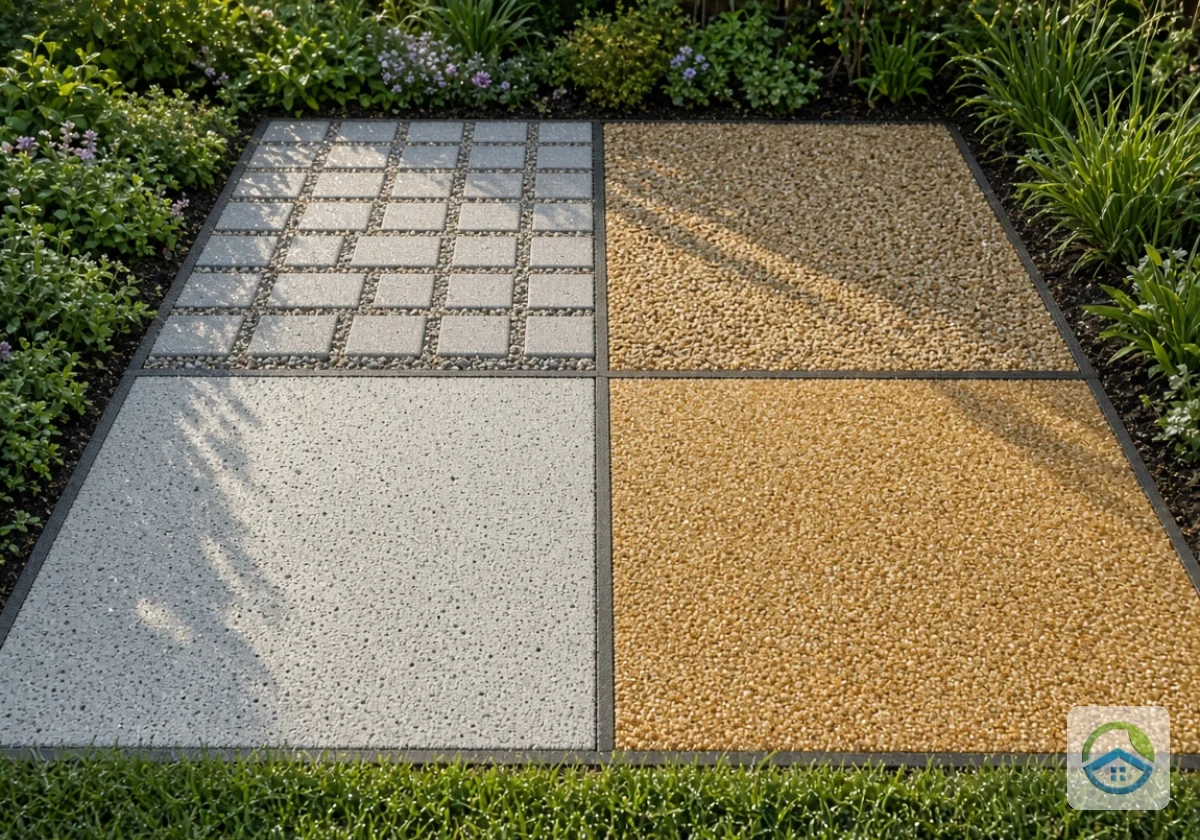
Once you’ve chosen a material, good design depends on where the water goes after it passes through. Each area also has its own job: a driveway has to carry car weight, while a pool surround needs to stay safe under bare feet. Below, we’ve explained how those demands determine the design across five common areas.
A Patio That Dries Quickly After a Downpour
Picture the morning after a heavy storm. On a solid patio, you’re sweeping puddles off the pavers before anyone can sit down. Rain drains straight down through a permeable patio, so it dries fast. You can set the chairs back out within hours.
To get this result, lay the pavers almost flat with only a gentle fall, around 1 to 2 per cent. If the fall is any steeper, water will run off the edge before it can soak in.
The joints need the same care as the slope, because they’re the path the water takes. Keep the joints topped up with the right chips. Empty joints let pavers shift and rock underfoot, so check them after each big clean (a pressure washer can strip a surprising amount of chips in one go).
Driveways That Carry Cars Without Cracking or Pooling
A driveway asks more of permeable paving than any other part of the garden. And three parts of the build carry most of that load:
- Choose a Vehicle-Rated Surface: A permeable driveway needs pavers or permeable concrete rated for vehicle loads. Thinner patio units can crack under the weight of a loaded ute. Ask your supplier to confirm the rating in writing.
- Deepen the Base Under the Car: The weight of a parked car passes through the surface into the ground below. For that reason, your installer should deepen the stone base under the parking spot. Extra depth spreads the load and stores more water in heavy rain.
- Fit Solid Edge Restraints: Solid restraints along both sides stop pavers from creeping outward every time a car turns (skipping them is a shortcut worth refusing on any quote).
Get these three parts right, and your driveway will keep its shape for many years. Most cracking and pooling problems start when an installer cuts one of them to save money.
Garden Paths Laid Straight Between the Planting Beds
Want a path that never turns to mud? Straight paths between planting beds suit permeable paving well, since the beds on either side catch any overflow. Gravel or pavers with wide joints both work here.
Gravel is cheaper and drains freely, but it needs a steel or timber edge to stop stones drifting into the mulch. Pavers usually cost more but give you a flatter surface for walking after rain. Whichever material you choose, set the path slightly above the surrounding soil. This keeps mulch and soil in the beds instead of washing across the path.
You’ll also want the path wide enough for a wheelbarrow, ideally at least 1 metre. With that width, you won’t be squeezing around beds with heavy loads of compost.
Pool Surrounds Without Slippery Puddles
Pool surrounds take constant splashing, so standing water quickly becomes a slip risk. Permeable pavers and resin bound surfaces drain that splash water straight down.
However, drainage alone won’t keep feet steady. You should choose a textured finish that grips wet feet. Smooth resin can feel slick, so request a sample from your supplier and test it barefoot. Leave it in the sun for an hour as well to see how hot it gets. While you have the supplier on the line, check that the surface can handle chlorine or salt water without fading or breaking down.
Before work starts, walk the pool fence footings with your installer. The base layers need to sit around those footings without weakening the posts, and any damage there could affect your pool fence compliance.
Front Gardens That Keep Water on the Block
If you’ve ever watched a summer storm wash mulch down your driveway, you know front gardens often slope toward the street. Permeable paving across the driveway and entry path keeps that water on your block, where it feeds your front plantings instead of the gutter.
Keep in mind that some councils limit how much of a front yard you can seal. You should check with your local council before you finalise the plan.
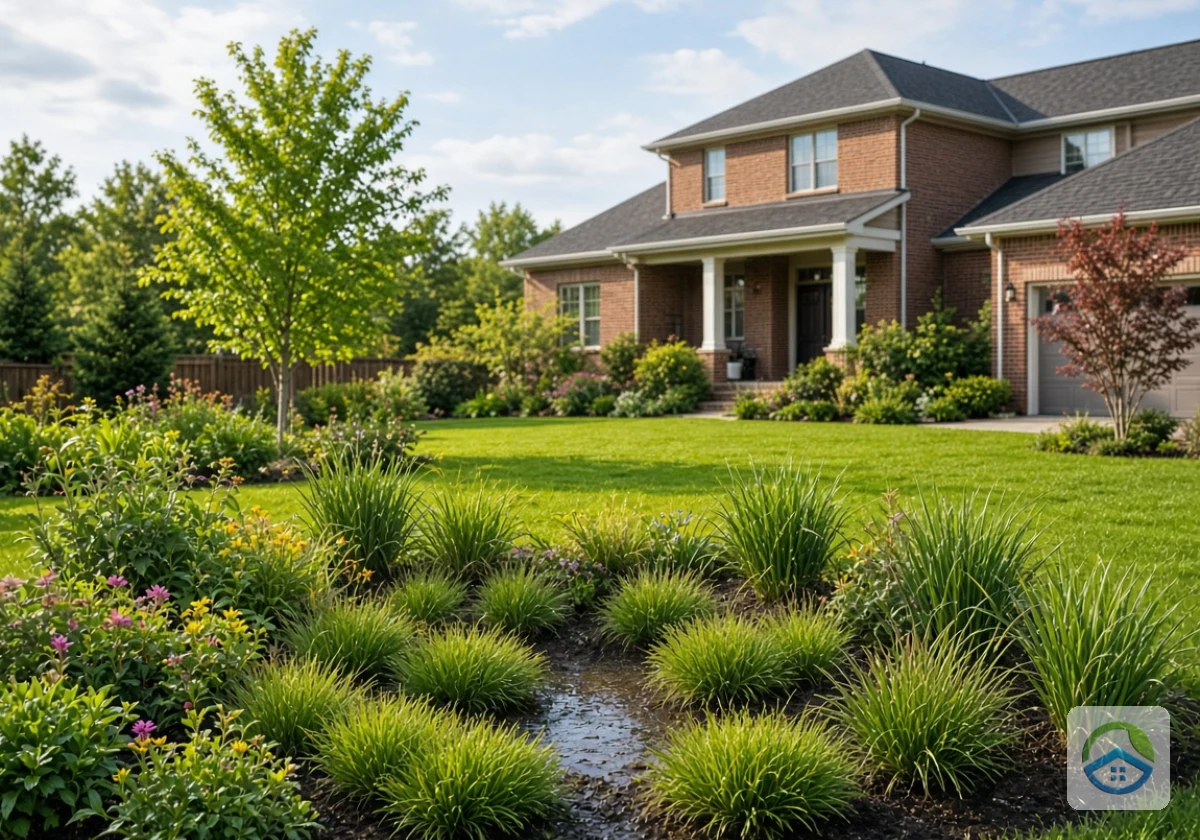
Once the paving is sorted, look at the lowest point of the garden. Pair the paving with a rain garden there. This planted dip catches overflow and lets it soak in slowly. As it fills and drains, it takes pressure off the stormwater drain out front.
The Base Under Permeable Pavers Decides How Long They Last
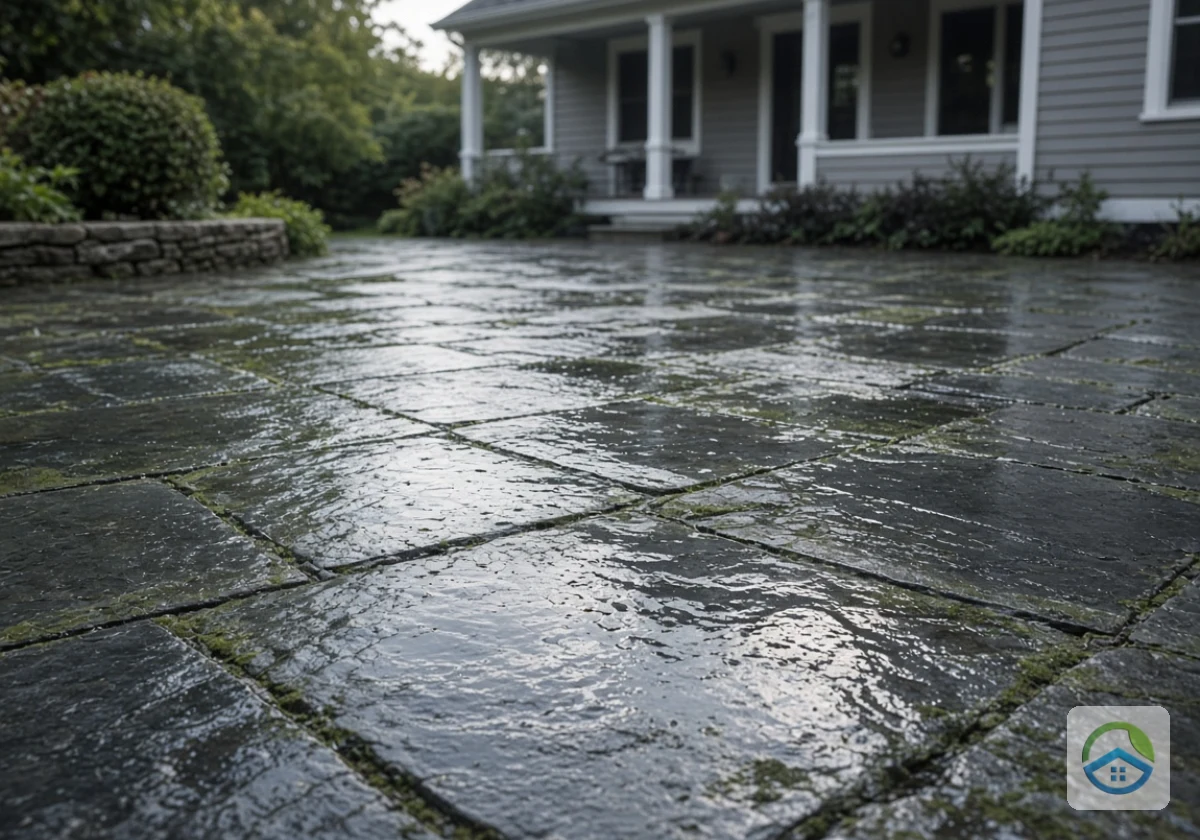
With the surface settled, the layers underneath decide whether your paving keeps draining or slowly clogs and sinks. From what we’ve seen on site, most failed permeable jobs trace back to a shallow or dirty base (even though the pavers on top usually cop the blame).
If you’re comparing quotes, ask how each installer handles these three layers.
- Open-Graded Stone Base: Clean crushed rock with no fine dust leaves gaps that hold water while it drains away. Depth varies by area, as covered in the driveway section above. Your quote should list a depth for every area.
- Bedding and Joint Chips: Your pavers sit on a thin layer of small, washed stone chips, and the same chips fill the joints. Some installers still use sand out of habit. It clogs within a few years, so make sure your quote names chips instead.
- Geotextile Fabric: Heavy clay soil is the biggest threat to a permeable base. Over time, fine clay works its way up into the stone and fills the gaps. A layer of geotextile fabric stops this, and it costs little compared with digging up a failed driveway. If your garden already puddles after rain, assume you’ll need it.
We suggest giving the stone base the closest attention, because it’s the hardest layer to fix once the pavers go down. Any quote that skips these details deserves a few questions before you sign.
Ready to Plan Paving That Handles the Rain?
The right surface depends on where your garden collects water and what each area has to carry. A driveway, a pool surround and a garden path each need a different mix of material and base.
Start by walking your block during the next heavy shower. Note where water pools or runs off, because those spots show you where a permeable surface will do the most good.
Want paving that soaks up every storm? Talk to Design Martus for design advice and a layout built around how water moves across your garden.