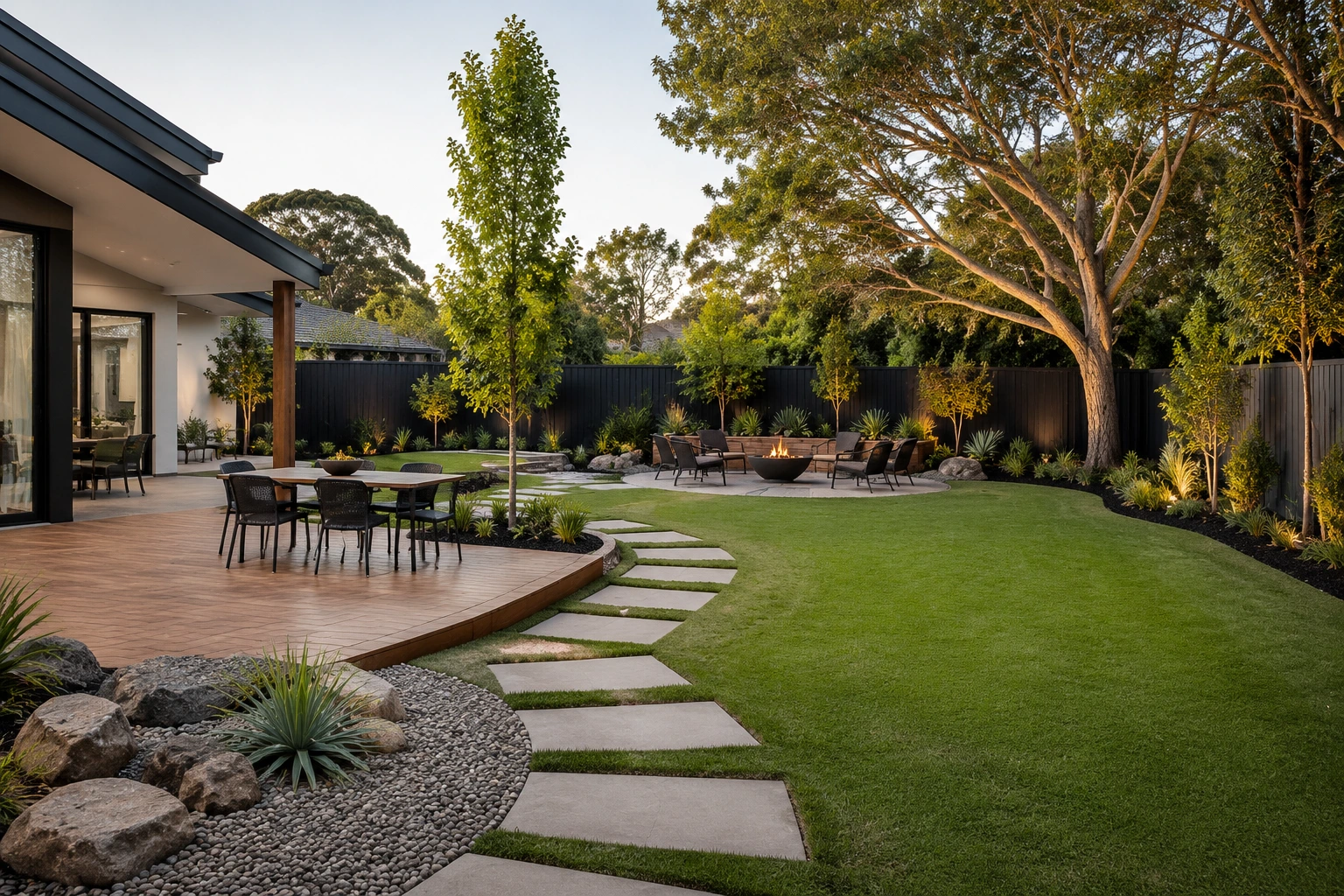
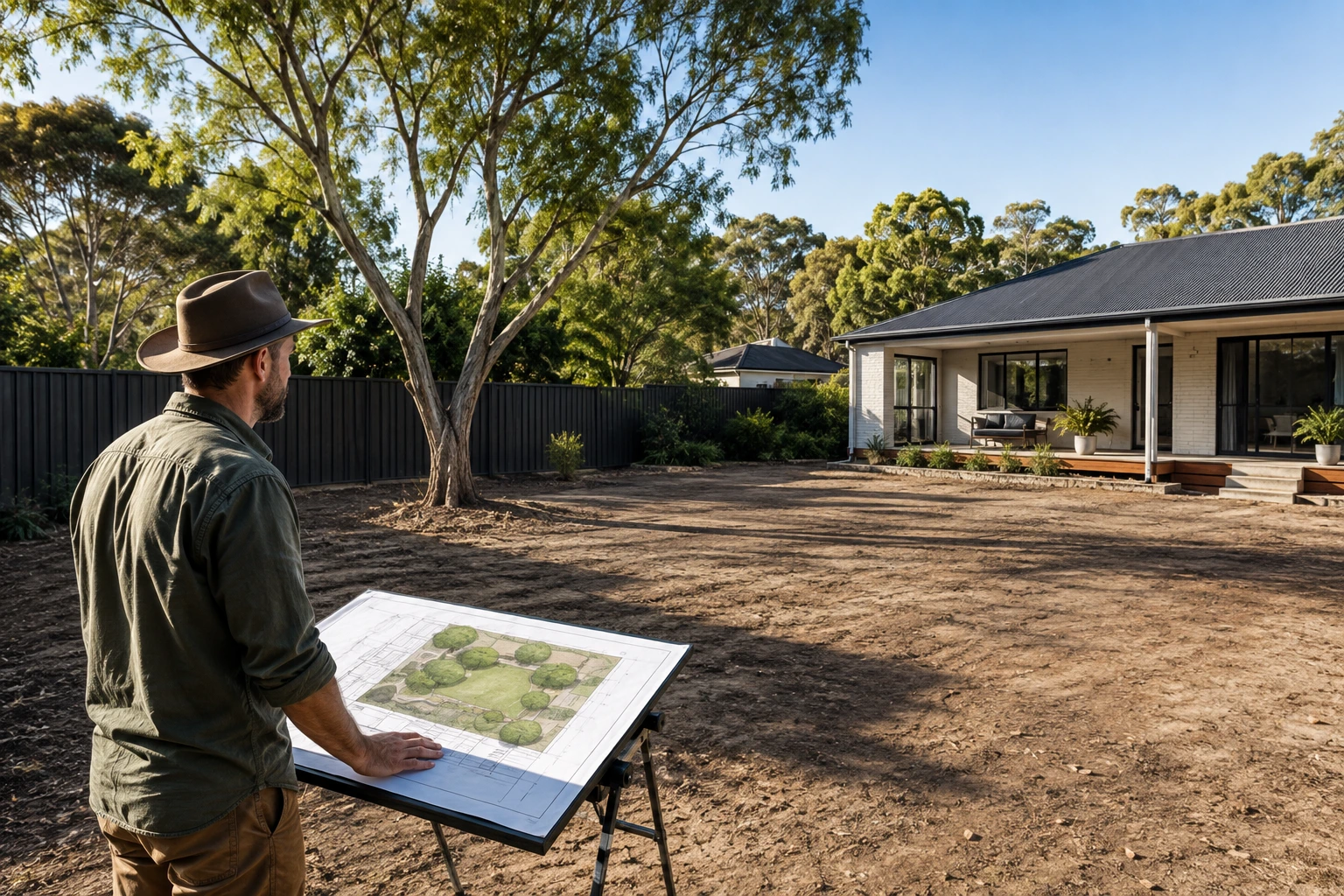
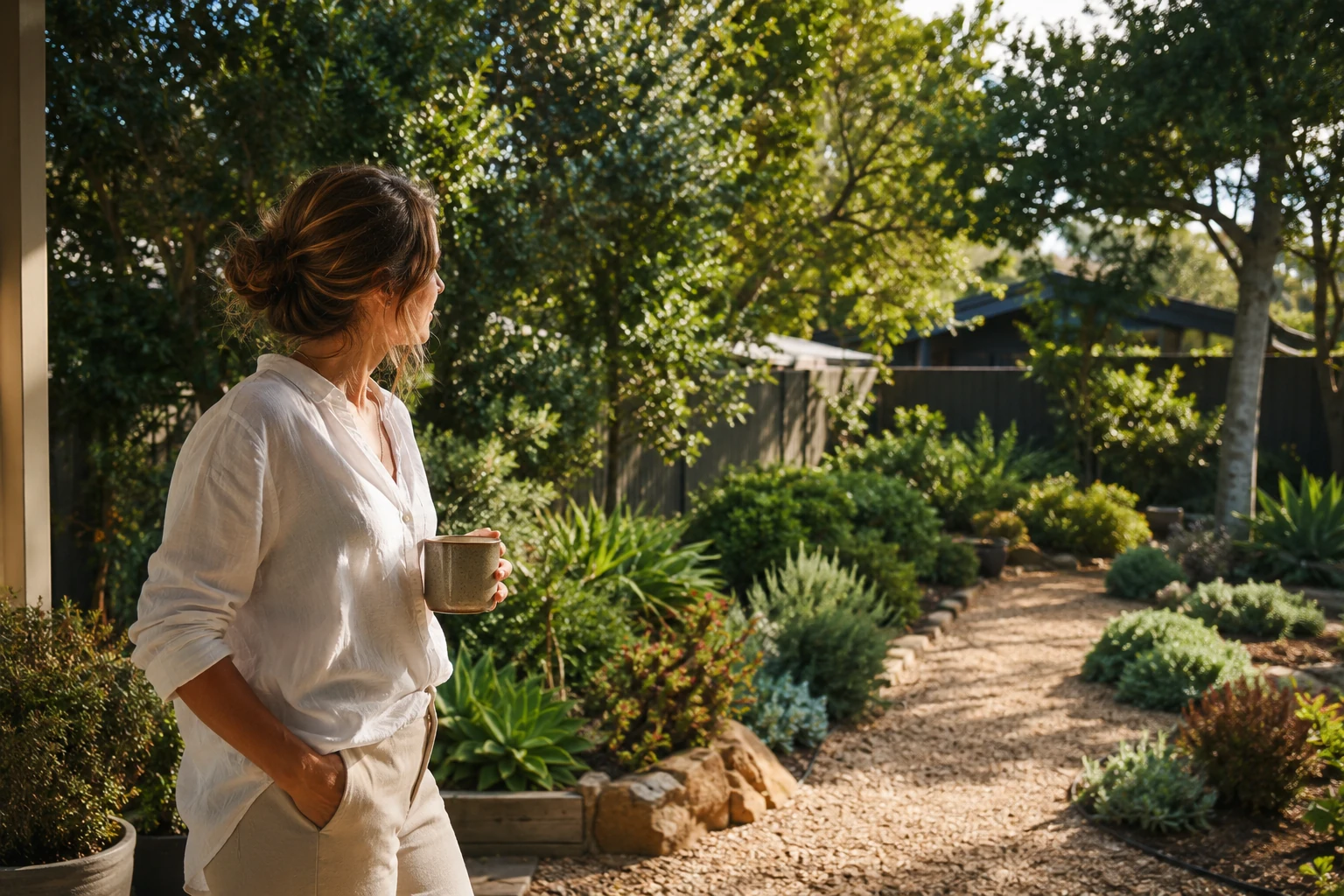
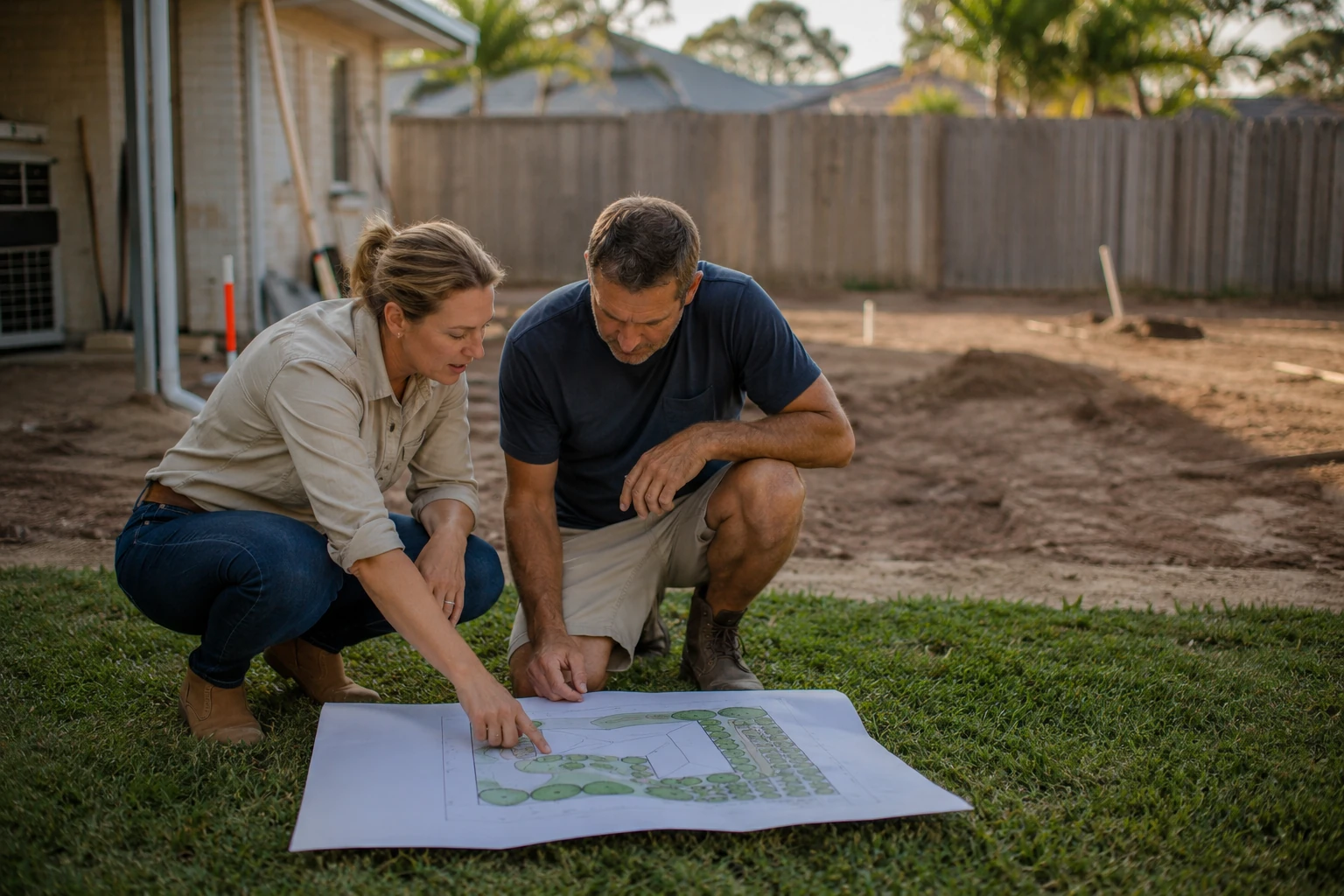
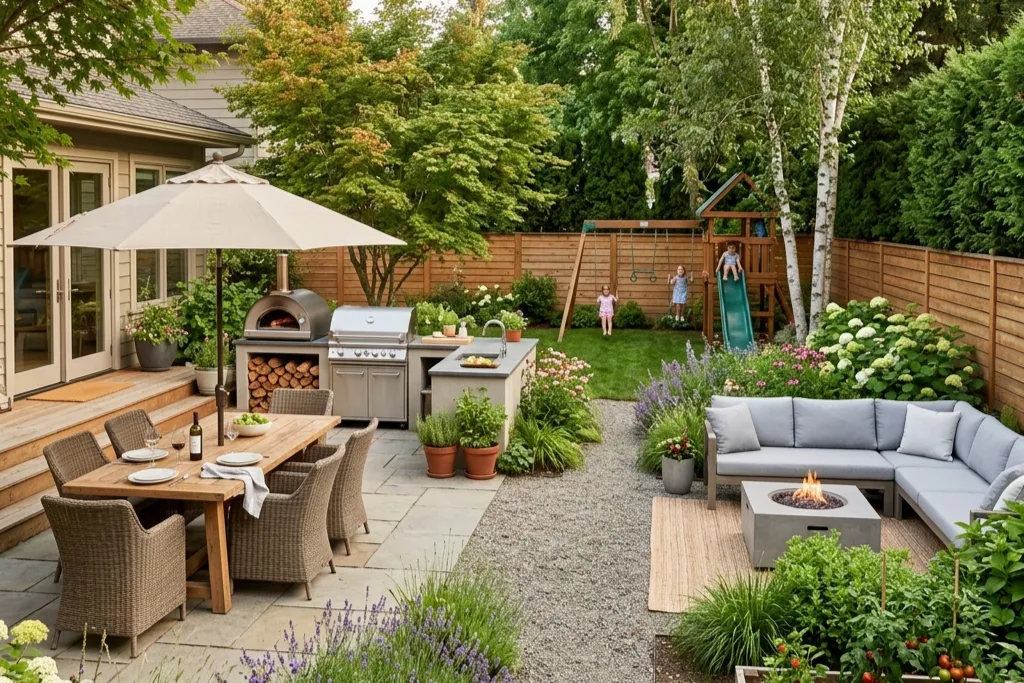
Professional landscape planning saves money through accurate material calculations, climate-appropriate plant selection, and drainage issues caught before construction starts. Those decisions reduce waste, prevent expensive rework, and lower ongoing maintenance costs.
But many homeowners focus more on the visual outcome than the planning process behind it. That’s completely normal, especially for first-time landscaping projects where the excitement of the result tends to overshadow the groundwork. However, without that groundwork, small oversights can become expensive problems later on.
This guide walks you through how professional landscape planning protects your budget and whether it’s worth it for your specific project.
First, let’s look at why unplanned projects tend to cost more than expected.
Why Unplanned Projects End Up Costing More
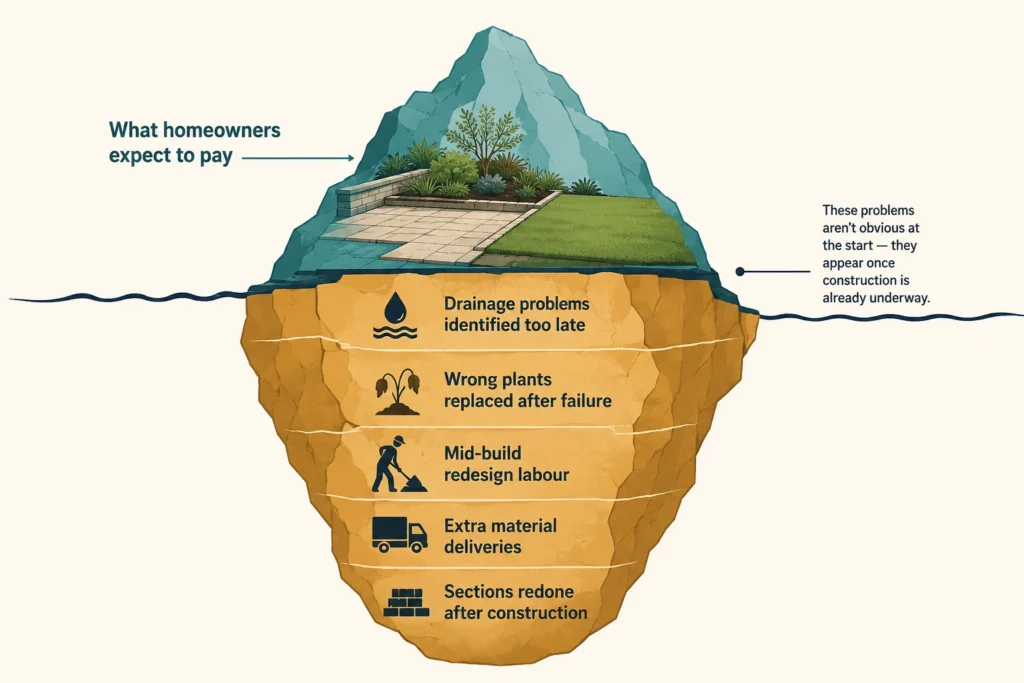
Most unplanned landscaping projects end up costing more because the expensive mistakes aren’t obvious at the start. Things like drainage, soil conditions, and mature plant size look fine on the surface until construction is underway.
That’s when those gaps turn into extra labour, replacement materials, or sections of the garden that need to be redone.
Six Ways Professional Landscape Planning Saves You Money
Every cost discussed above can usually be traced back to a decision made too early or without enough information.
A professional landscape plan fills those gaps in six distinct ways.
The Right Plants Mean Fewer Replacements
If you choose the wrong plants for your outdoor space, you’ll probably end up replacing them sooner than expected. Every plant has its own requirements for sunlight, soil, drainage, and available space. A species that thrives in one part of Brisbane may struggle in another if the conditions are different.
This means professional plant selection goes beyond picking what looks good in the nursery. A landscaper will assess your soil, sun exposure, and available space before recommending anything.
And once the plants match your specific conditions, they establish faster, need less maintenance, and last considerably longer. That means fewer replacements, less labour, and no wasted spend.
Drainage Problems Get Solved Before They’re Expensive
The worst thing about drainage problems is that by the time you notice them, they’re already expensive. Water pooling where it shouldn’t, garden beds washing away, or retaining walls starting to move all mean digging up work that’s already been finished.
We saw this on a Brisbane property last year. The homeowners contacted us after their newly built retaining wall started leaning just a few months after completion. When we assessed the site, the issue wasn’t the wall itself. It was poor drainage behind it that had never been identified before construction began.
Once water started building up behind the wall, the damage followed. A proper site assessment would have identified those drainage patterns before the first shovel went into the ground.
You Buy the Right Materials the First Time
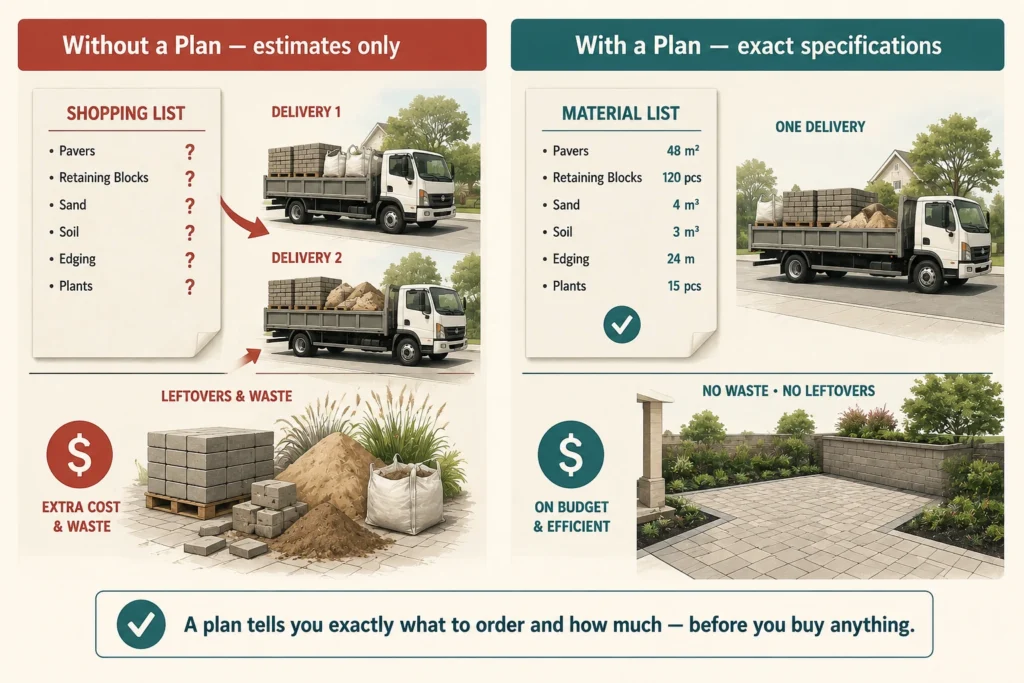
A plan tells you exactly which materials you need and how much of each to order before you buy anything. It also specifies which materials are best suited to each part of the project, including soil and mulch, paving, edging, and other hardscaping materials.
Without accurate measurements, you’re relying on estimates. That’s how projects end up with leftover materials sitting in the driveway or extra deliveries arriving halfway through the job.
You Avoid Mid-Build Redesigns
Once construction starts, every design change comes at a cost. Instead of moving lines on a plan, you’re moving paving, irrigation, or garden beds that have already been built.
That’s why a professional plan works through those decisions before construction begins. You can adjust the layout, move a patio, or rethink where a tree should go while everything is still on paper.
Water-Efficient Design Cuts Ongoing Bills
Inefficient irrigation can add $85–$145 to a Brisbane household’s annual water bill. It’s based on Urban Utilities‘ FY27 rate of $4.57 per kilolitre and an estimated 19–32 kilolitres of preventable water waste each year.
A landscape plan helps avoid that waste by designing the irrigation system around your yard’s specific needs. This means water goes where it’s needed, without overwatering some areas or leaving others too dry. And if you pair the system with an automatic timer, it keeps water use and ongoing bills under control with very little effort.
A Staged Plan Keeps the Budget Realistic
Not every homeowner can afford to landscape the entire yard at once, and a good plan takes that into account from the start. It breaks the project into manageable stages, so you can complete one area now and leave the next for later without compromising the overall design.
Without that roadmap, it’s easy to spend too much too soon or tackle the project bit by bit with no clear direction. The result is often a yard that feels disconnected or finished areas that need changing to fit later additions.
Is Professional Planning Worth It for a Small Yard?
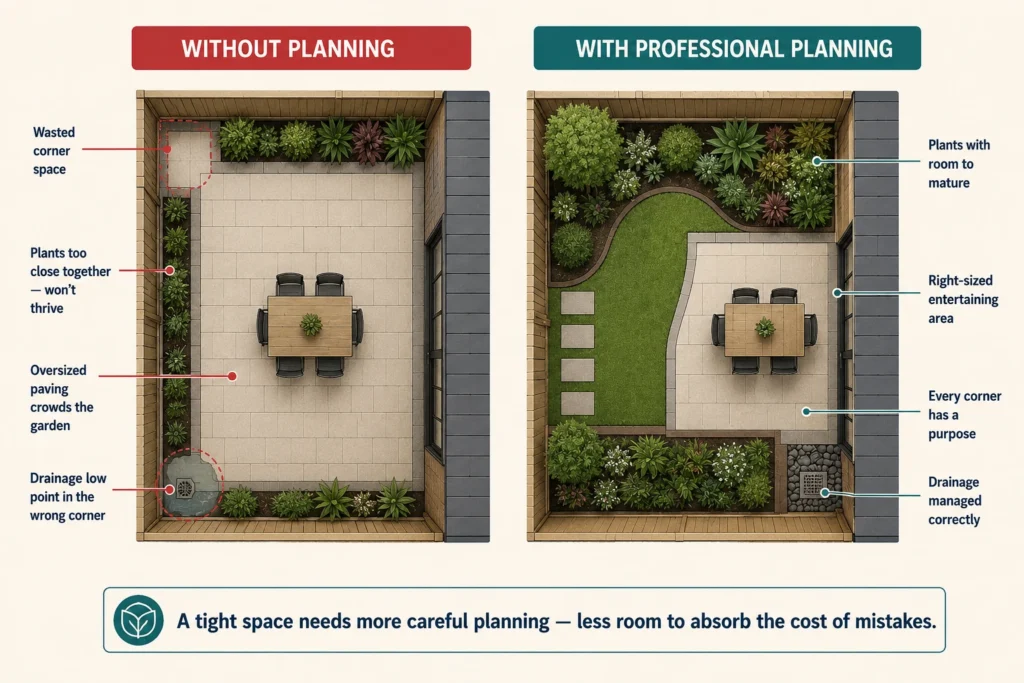
Yes, and arguably more so. The same problems that blow budgets on large projects occur on smaller yards too, just with less room to absorb the cost.
A smaller garden leaves less margin for error. Wrong plants, poor drainage, or a layout that wastes space are harder to hide when the yard is compact.
And the cost of fixing those mistakes doesn’t get smaller just because the yard does. If anything, a tight space needs more careful planning to get the most out of every square metre.
Getting Started with a Landscape Plan for Your Outdoor Space
By the time drainage problems, failed plants, or layout issues become obvious, they’re often expensive to fix. A landscape plan helps you avoid those problems by making the important decisions before construction begins.
If you’re ready to start your project, a professional site consultation is the best place to begin. It gives you a clear picture of your property’s conditions before any money is spent. From there, the Design Martus team can put together a plan built around your property, your budget, and your intended use of the space.
Frequently Asked Questions
Every project is different, so it’s natural to have questions about costs, timelines, and what a landscape plan actually includes. Here are answers to some of the most common ones.
How much does a professional landscape design plan cost?
The cost of a professional landscape design plan depends on the size, scope, and complexity of the project. For residential properties in Brisbane, design fees typically range from $2,000 to $6,000, although larger or more detailed projects may cost more.
Where do I start if I need design inspiration for my backyard?
Start with how you want to use the space. A functional entertaining area, a low-maintenance lawn, or a combination of both are all good starting points. From there, a landscaper can turn those ideas into a backyard design that suits your property and budget.
Does a landscape plan cover lighting and other details?
Yes. A thorough plan covers the full range of outdoor details, including lighting, lawn areas, shrubs, and structural elements. Getting those details into the plan early means they’re properly connected to the overall design rather than added as an afterthought.
Can professional planning support sustainable outdoor spaces?
Yes. Professional landscape planning can support a more sustainable outdoor space. It helps you choose plants suited to Brisbane’s climate, create habitat for local wildlife, and design around your property’s natural conditions. The result is often a landscape that requires fewer resources to maintain over time.