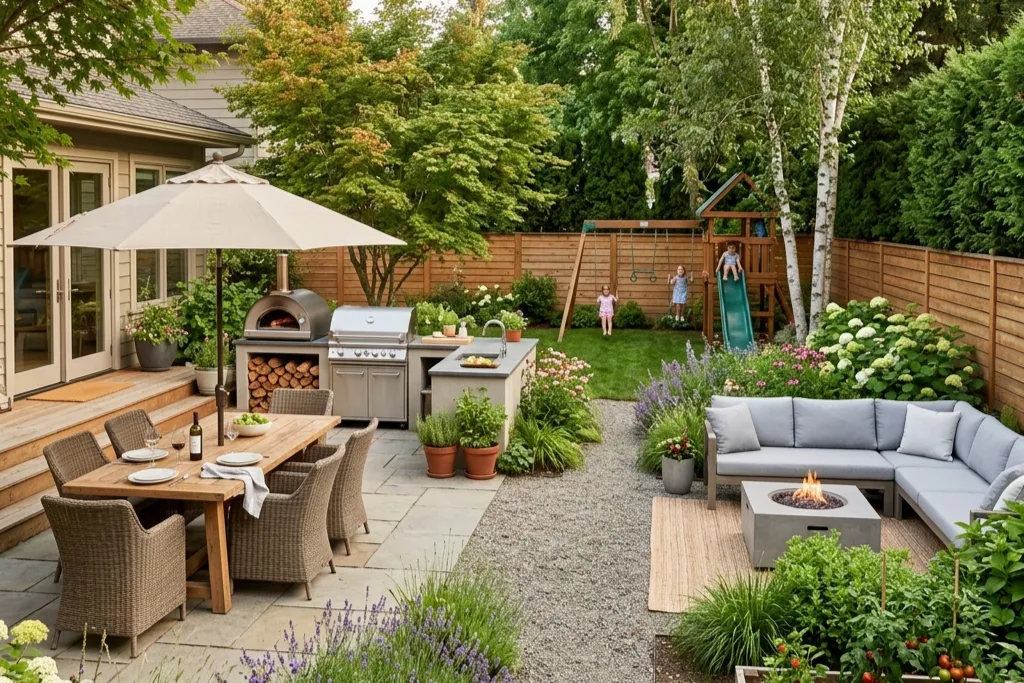
Your garden looks incredible in spring, full and colourful, exactly how you imagined it would be. By midsummer, you’re mowing every weekend, pulling weeds before work, and dragging the hose around twice a week just to keep everything looking healthy.
This usually happens because the garden wasn’t planned with growth in mind. A plant that looks perfect in a 20cm pot can quickly outgrow its space and create more pruning and maintenance work.
Fortunately, you don’t need to start over to create a garden that’s easier to manage. The way you plan the space, choose plants, and handle watering can reduce weeds, prevent overgrowth, and make upkeep easier. Keep reading; we’ll show you how in this practical guide.
Design a Garden Layout That Reduces Maintenance
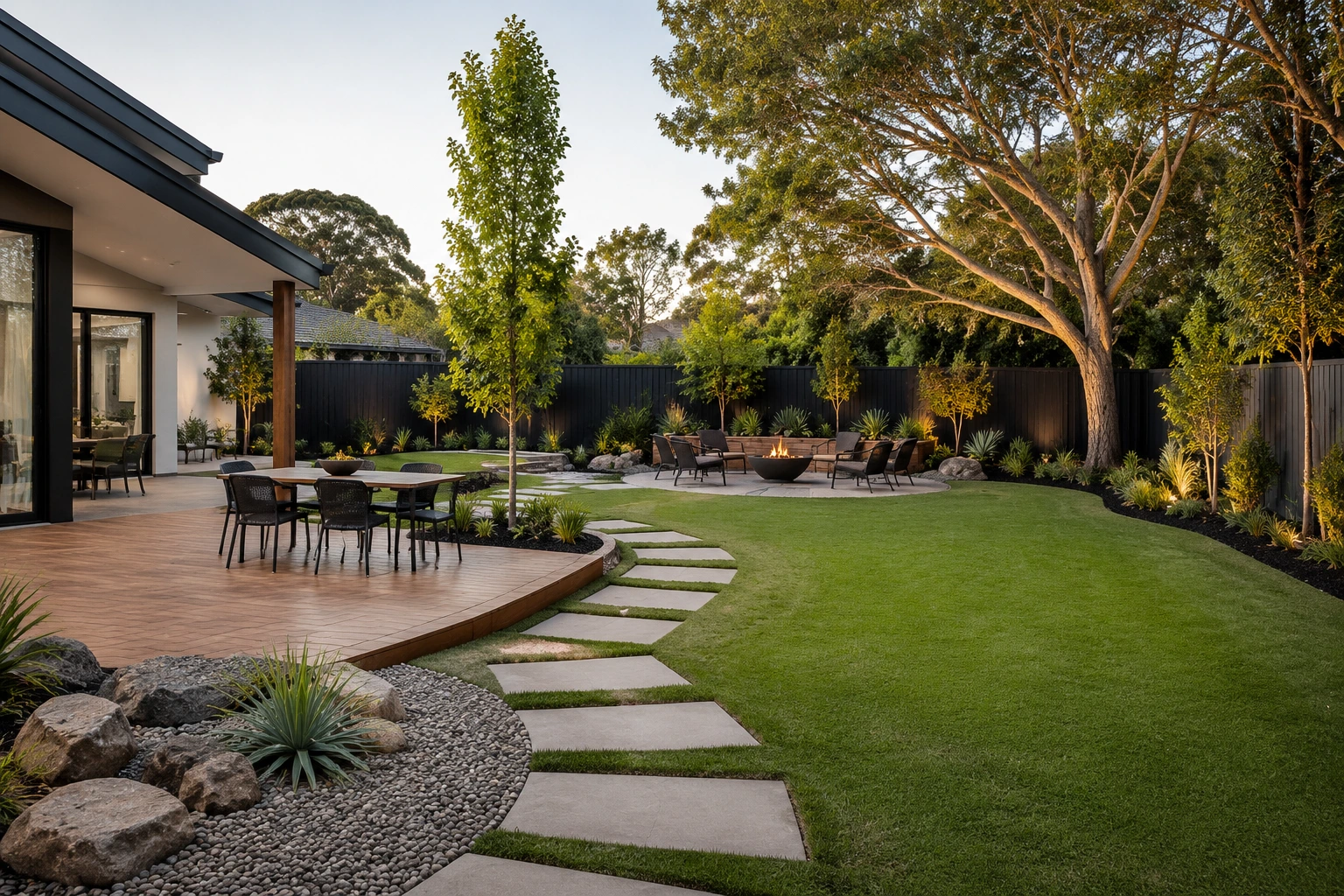
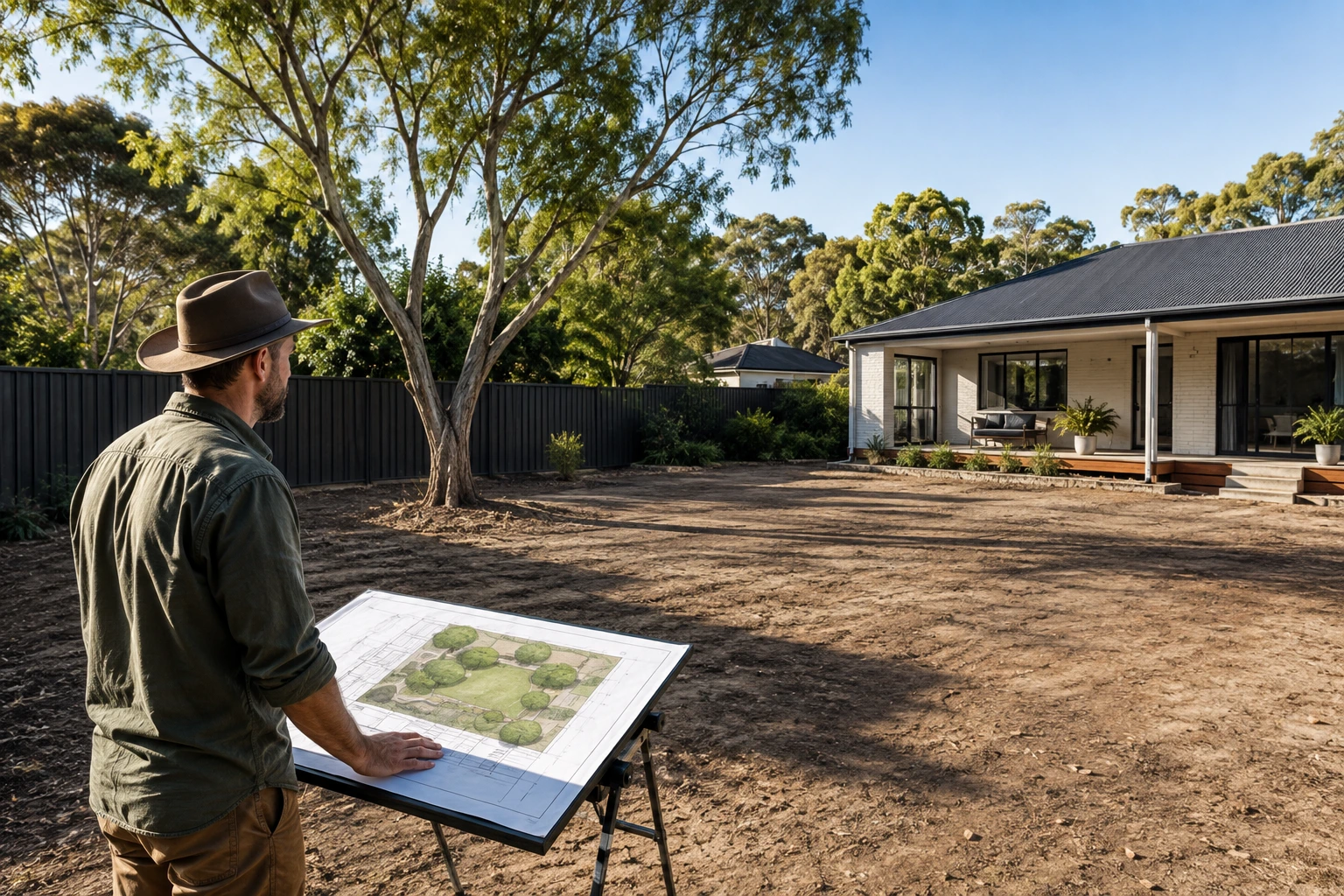
A low-maintenance garden starts with how the space is designed. When you get the layout right, everything that follows becomes easier to manage. Here are the design decisions that reduce ongoing work from the start:
- Edge Your Lawn and Garden Beds: Clear edges between lawns and garden beds stop grass from creeping into planting areas and reduce the need for regular trimming and hand-weeding. Borders also help keep pathways, lawns, and planting areas clearly separate.
- Group Plants by Watering Needs: Placing plants with similar watering needs together lets you water an entire bed in one go without over-or under-watering anything. It saves time on the hose and reduces plant stress caused by inconsistent watering.
- Reduce Planted Area With Hardscaping: You don’t need plants in every corner of your garden. Paths, patios, gravel areas, and seating spaces are practical alternatives that replace high-maintenance planting areas with surfaces that need almost no upkeep.
These decisions set the foundation for a garden that’s easier to maintain over time. In fact, from what we’ve seen working on gardens across Brisbane, getting the layout right is often the first step toward creating a low-maintenance landscape.
Choose Plants That Add Colour Without Extra Work
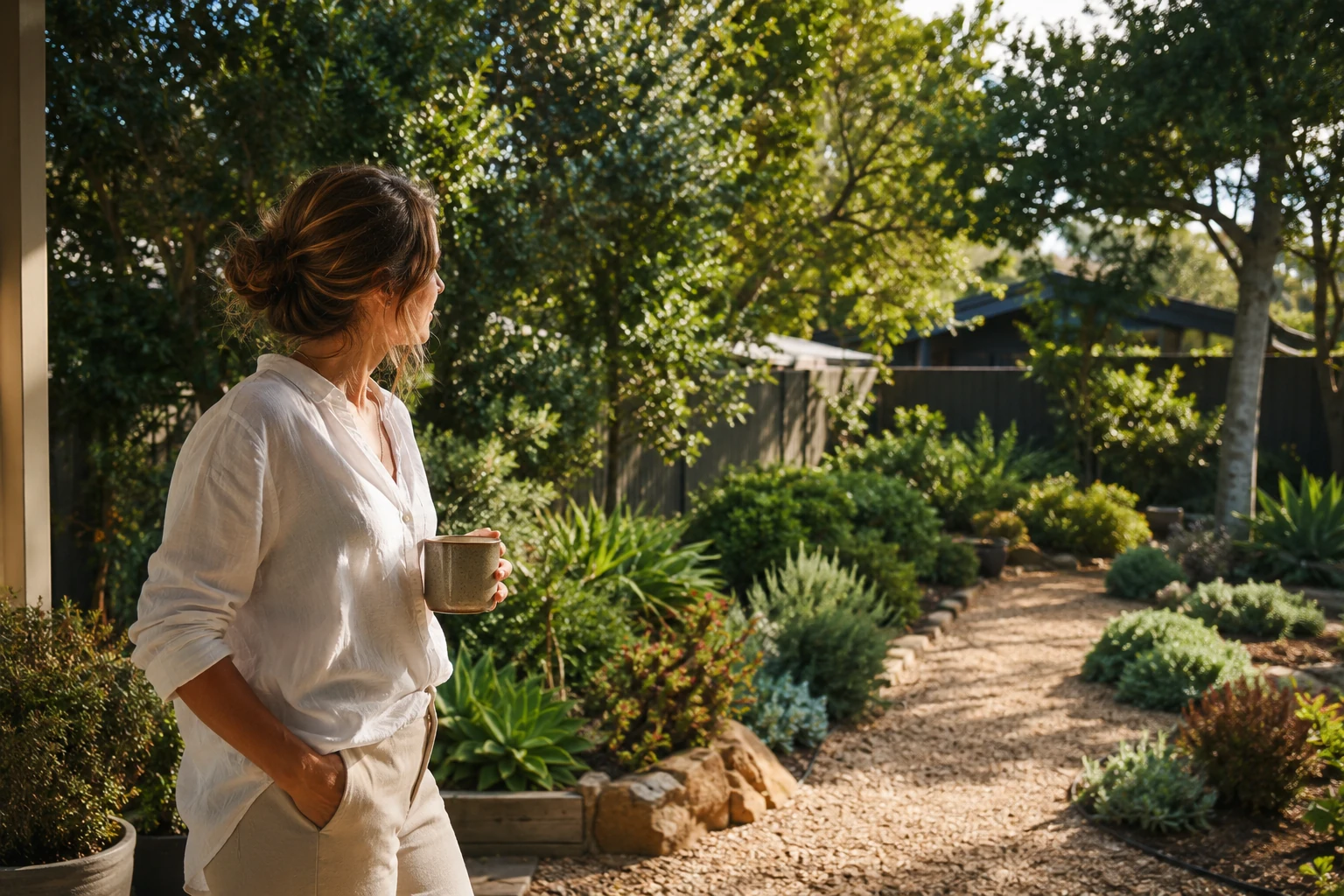
Colourful gardens don’t have to mean constant deadheading and replanting each season. The right plants deliver colour year after year with minimal input, as long as they suit your soil, sun, and climate.
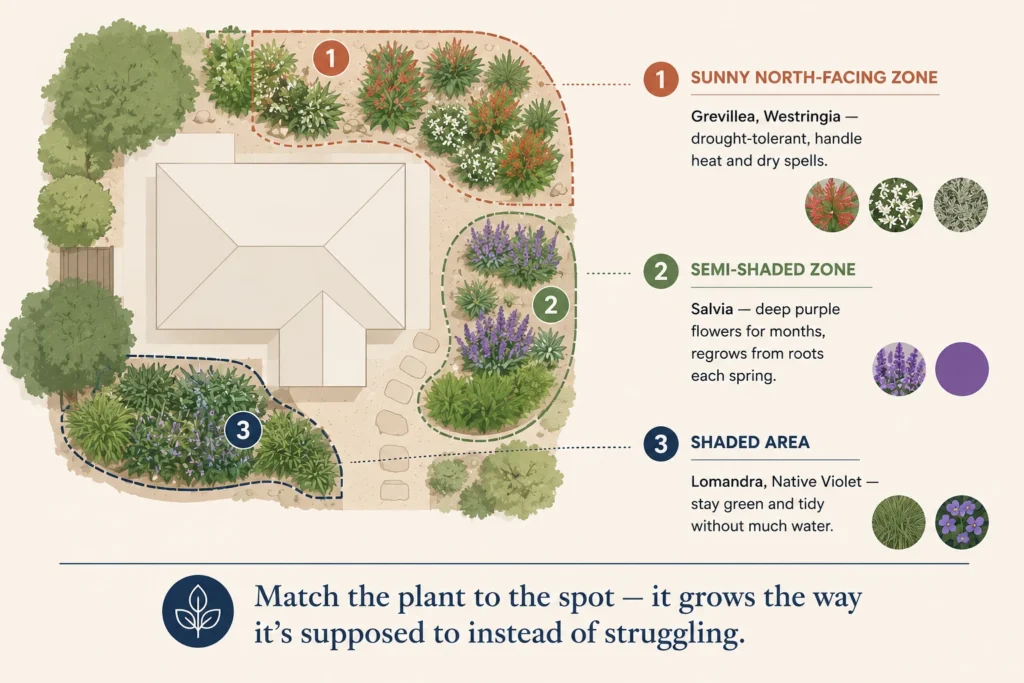
Salvia is a good example. It produces long spikes of deep purple and red flowers that bloom for months at a time. You don’t need to replant it every season either. It dies back in winter and regrows from the same root system the following spring.
But before you plant anything, think about your soil, sun, and position first. For example, a sunny north-facing bed in Brisbane’s heat needs something drought-tolerant like grevillea or westringia (both handle heat and dry spells well).
And if your garden has a shadier area, lomandra or native violet are better options because they stay green and tidy without much water.
Matching the plant to the spot allows it to grow the way it’s supposed to, rather than struggling and needing constant attention to survive.
Create Structure With Trees, Shrubs, and Groundcovers
Plant selection is only part of creating a low-maintenance garden. The way you combine trees, shrubs, and groundcovers gives the space structure while reducing ongoing work.
So consider these layers:
- Trees for Shade and Structure: A well-placed tree creates shade, adds height, and can reduce the amount of direct sun hitting surrounding plants. Smaller options like crepe myrtle or lilly pilly provide these benefits without the size and leaf drop of larger trees.
- Shrubs for Shape and Space: If you want the garden to look full without constant replanting, shrubs are the answer. They fill the space between taller trees and lower groundcovers, which helps prevent empty patches where weeds can grow.
- Groundcovers for Bare Soil: Any patch of exposed soil in your garden is an open invitation for weeds. Groundcovers like native violet or dichondra reduce weed growth by covering exposed soil and retaining moisture.
When these three layers work together, the garden feels fuller, stays tidier, and requires less regular attention.
Replace High-Maintenance Lawn Areas
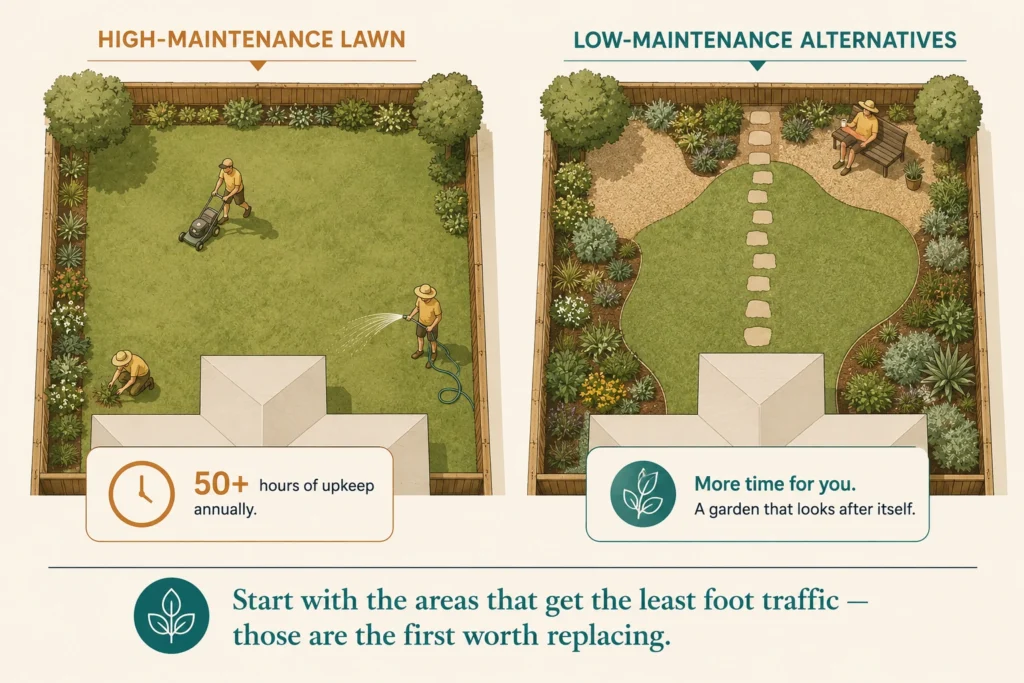
Lawns are one of the most time-intensive parts of any garden. Between mowing, edging, and fertilising, a standard suburban lawn can eat up more than 50 hours of upkeep a year. And that’s before you factor in the brown patches, weeds, and bare spots that appear every summer.
The good news is that you don’t need to remove your entire lawn to reduce the workload. Start by identifying the areas that get the least foot traffic. Those are the sections worth replacing first, since they’re being maintained without actually being used.
Below are some alternatives worth considering for those areas:
- Decomposed granite or gravel
- Paving or stepping stones
- Native groundcovers like buffalo grass or creeping thyme
- Mulched garden beds with structural plants
If you’re not sure which option suits your outdoor space, it helps to look at how each area gets used before making any changes. One of the most common landscaping mistakes we see homeowners make is replacing lawn with a surface that doesn’t suit the space.
Use Mulch and Drip Irrigation to Reduce Garden Maintenance
Mulch is one of the most effective things you can add to a low-maintenance garden. In fact, a 3 to 5 inch layer across your garden beds can cut soil water evaporation by up to 70% compared to bare soil. It regulates soil temperature, which is helpful in Brisbane’s climate where summer heat can stress plants quickly.
This ground cover works even better when you combine it with a drip irrigation system. These systems deliver water slowly to the base of each plant through narrow tubes. As a result, less water evaporates before it reaches the roots. You also spend far less time watering by hand.
Refresh Your Existing Garden Without Starting Over
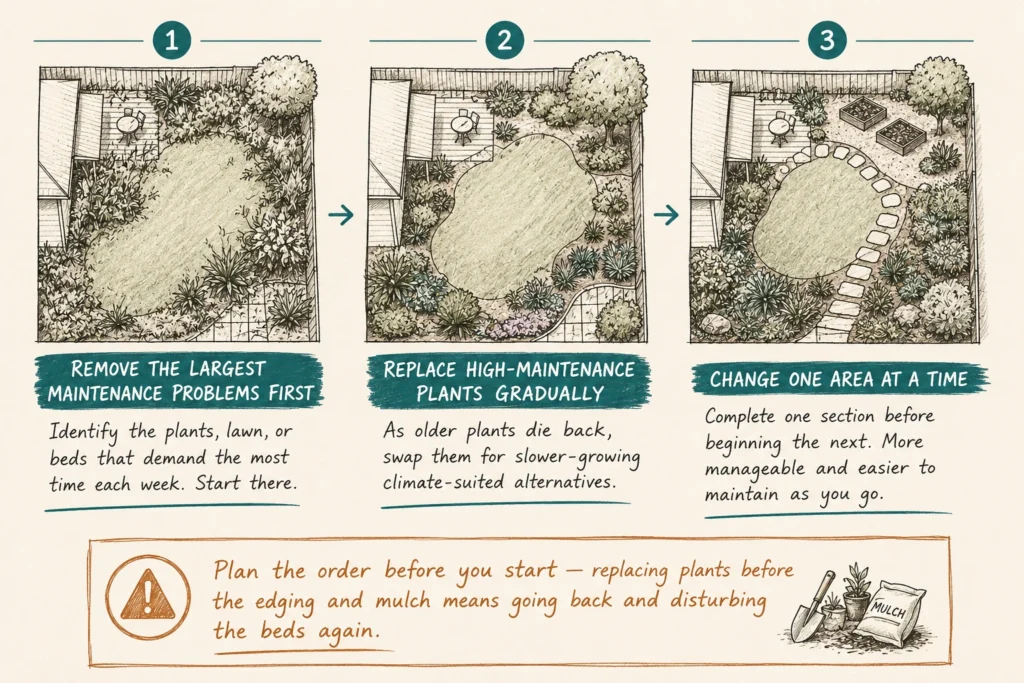
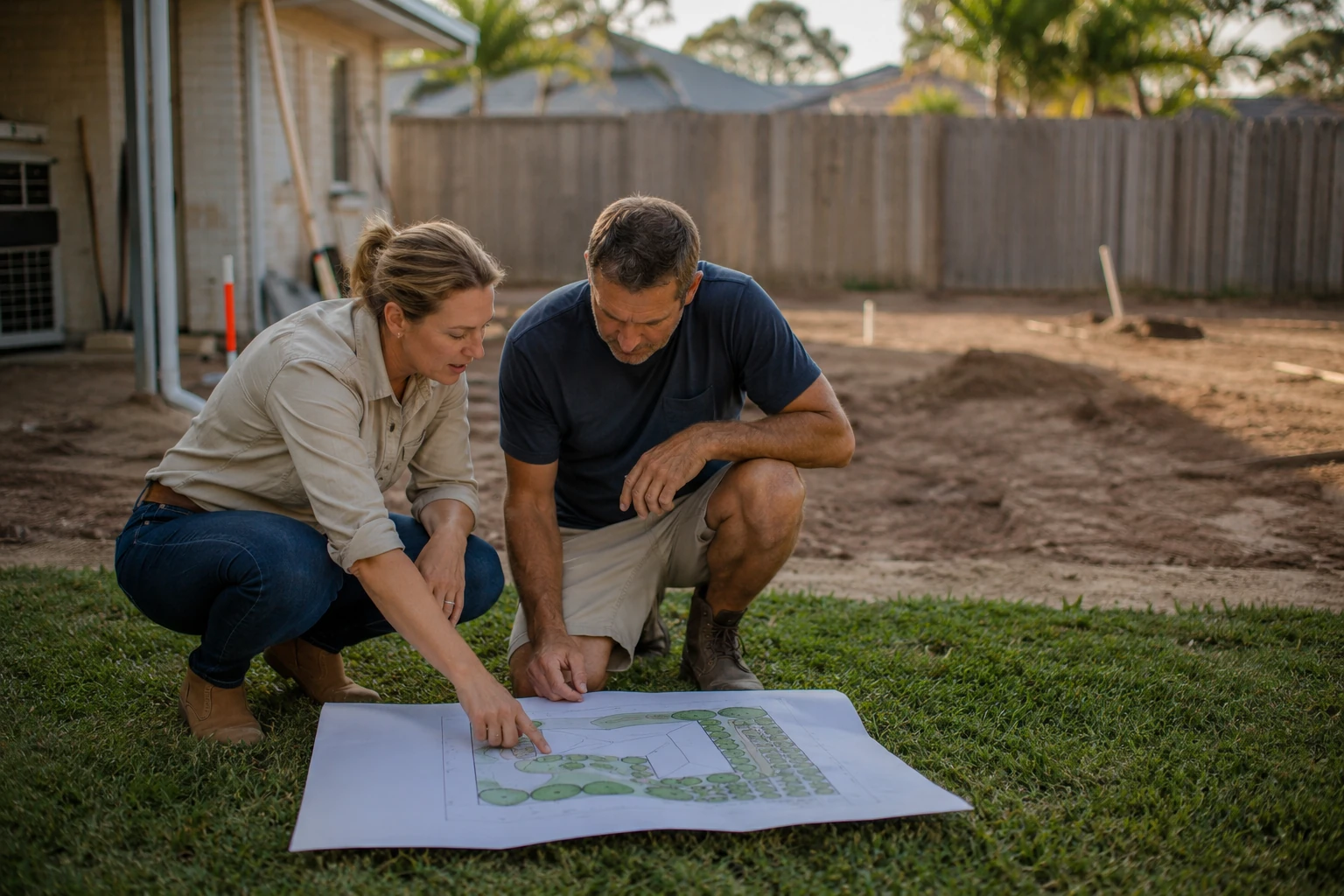
Refreshing an existing garden doesn’t mean pulling everything out and starting again. Most outdoor spaces become much easier to maintain after a few well-chosen changes. Start with the areas that create the most work, then build from there.
- Remove the Largest Maintenance Problems First: Don’t try to improve everything at once. Focus on the plants, lawn, or garden beds that demand the most watering, pruning, or weeding. Replacing these problem areas first can remove the tasks that take up most of your time each week.
- Replace High-Maintenance Plants Gradually: You don’t need to replant the entire garden in one go. As older or struggling plants die back, swap them for slower-growing, climate-suited alternatives. The space will need less work within a season.
- Change One Area at a Time: Trying to refresh the whole garden at once is how projects stall, and budgets blow out. Pick the highest-maintenance area, complete that section, then begin the next. It’s a more manageable approach, and the results are easier to maintain as you go.
Quick Tip: If you’re doing multiple changes, plan the order before you start. Replacing plants before you’ve sorted the edging and mulch, for example, means going back and disturbing the beds again.
A Beautiful Garden Starts With the Right Design Choices
A beautiful garden comes down to the choices you make before you ever pick up a shovel. That includes the layout, plant choices, and watering approach. Make those choices well, and your garden will stay attractive while requiring far less ongoing upkeep.
And if you’d love a low-maintenance landscaping solution but aren’t sure where to start, the team at Design Martus can help. We’ve worked with Brisbane families and homeowners on projects of all sizes, and we’d be happy to help you find the right approach for your outdoor space.
Get in touch to discuss your garden.