When a landscaping project runs over time, most homeowners assume the contractor is behind. Sometimes that’s true. But more often, the delay was locked in long before anyone picked up a shovel, back when the planning was still happening.
That’s because the decisions made during planning don’t always reveal their consequences straight away. Issues like missing approvals, overlooked drainage problems, and an unclear project scope often don’t surface until crews are already on site.
This article explores the planning mistakes that most often delay landscaping projects and what addressing them early actually looks like in practice.
Let’s get into it.
Failing to Define the Project Scope
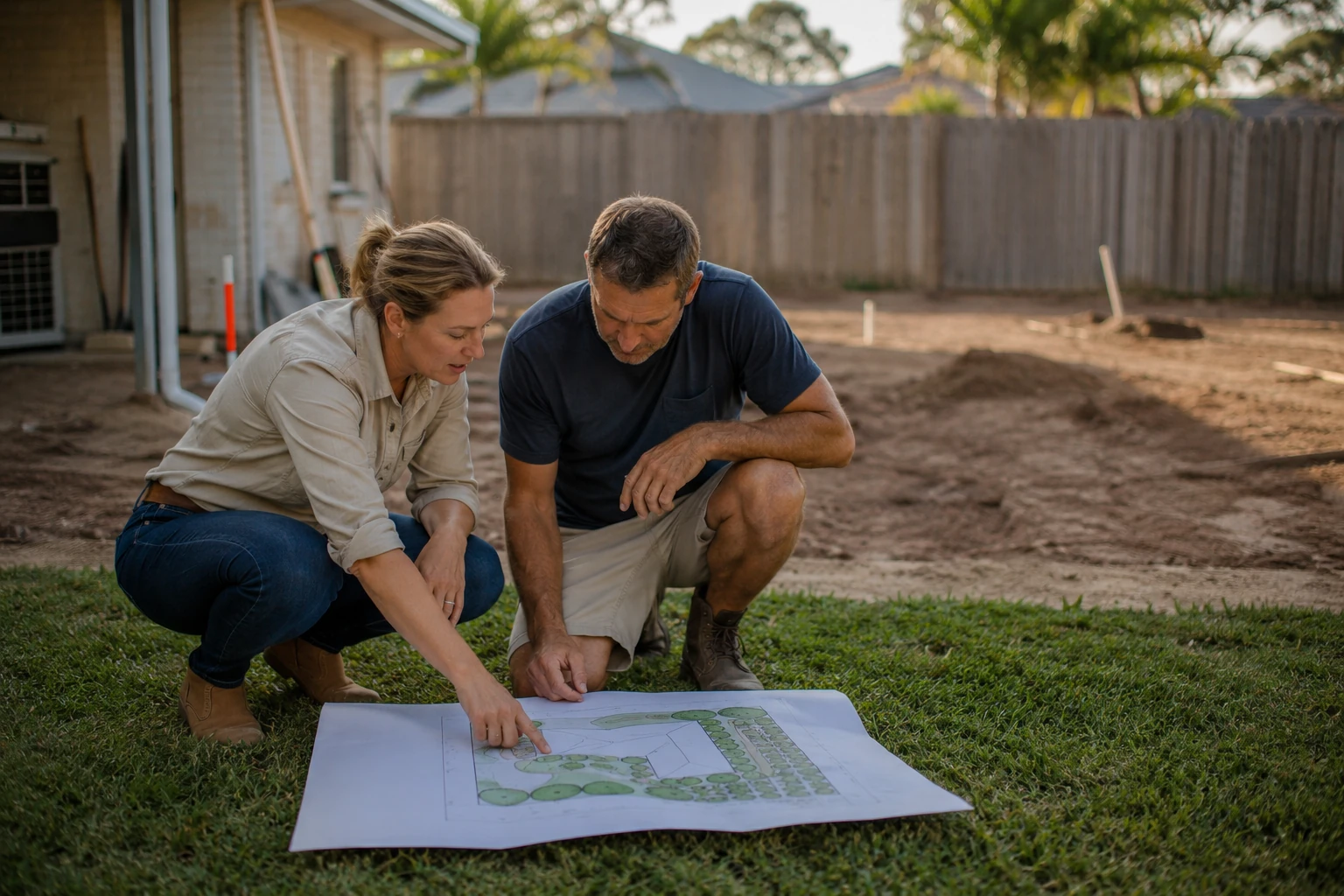
Most landscaping delays start with a scope that was never properly locked in before work began. You might have a general idea of what you want, like a new patio, some garden beds, or a retaining wall. But general ideas leave room for changes once work is underway. And changes mid-project are one of the most common reasons timelines blow out.
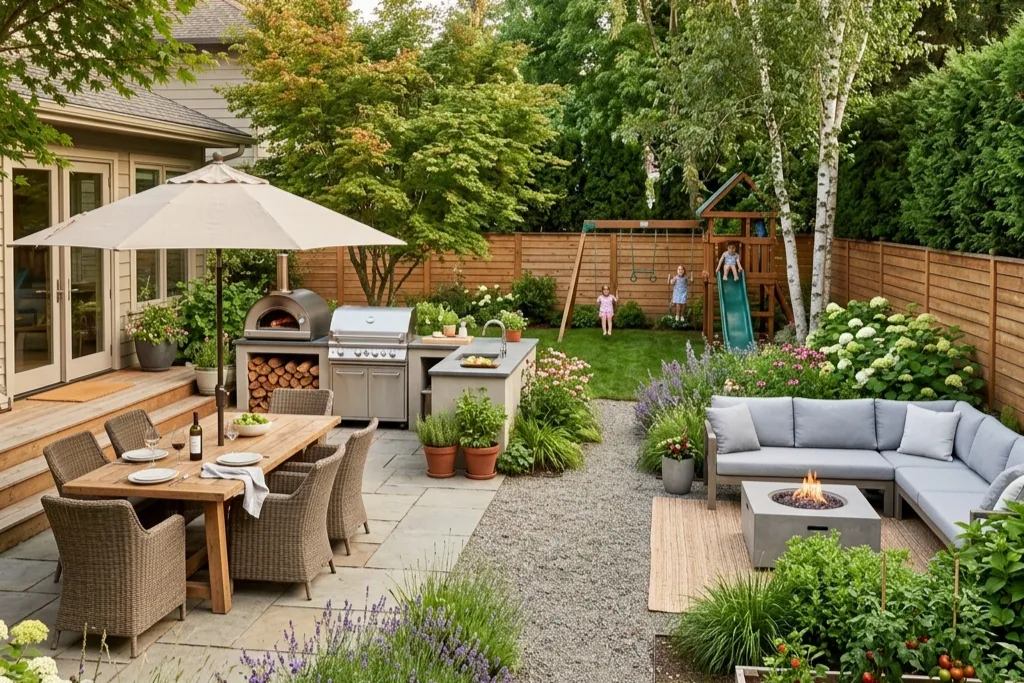
Say your contractor is halfway through pouring a paved area when you decide you also want a built-in fire pit. That one addition means different materials, a revised layout, and often a council approval depending on your local rules (more on that shortly). What felt like a small update on your end becomes a full stop for the crew.
That’s why writing down your scope and agreeing on it before work starts protects your timeline. It also protects your budget, since scope changes almost always cost more once tradespeople are already on site.
Skipping a Proper Site Assessment
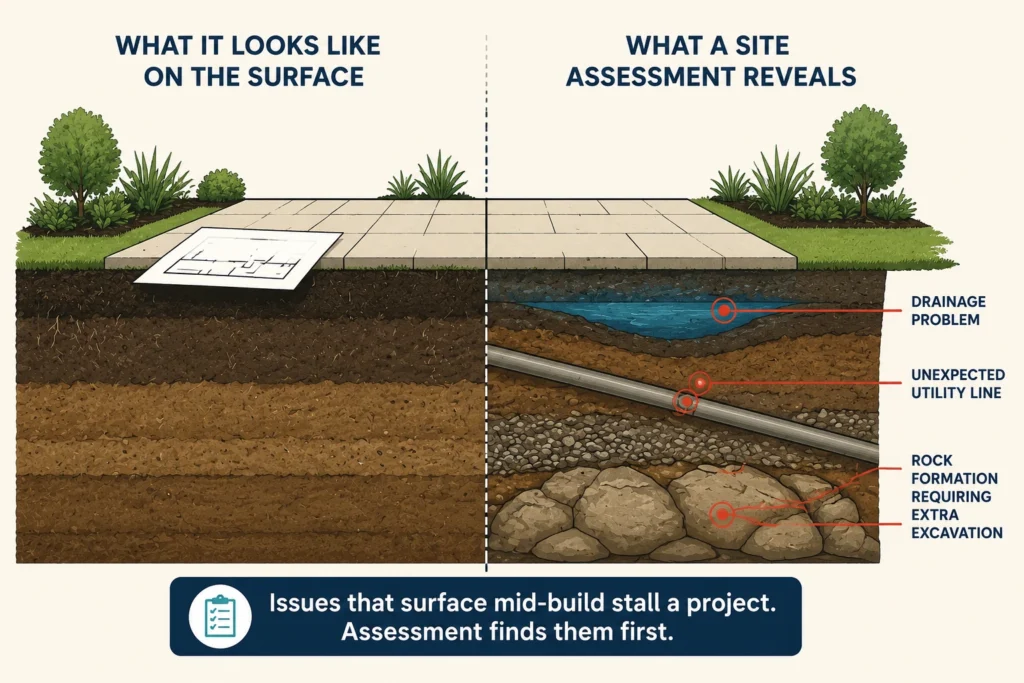
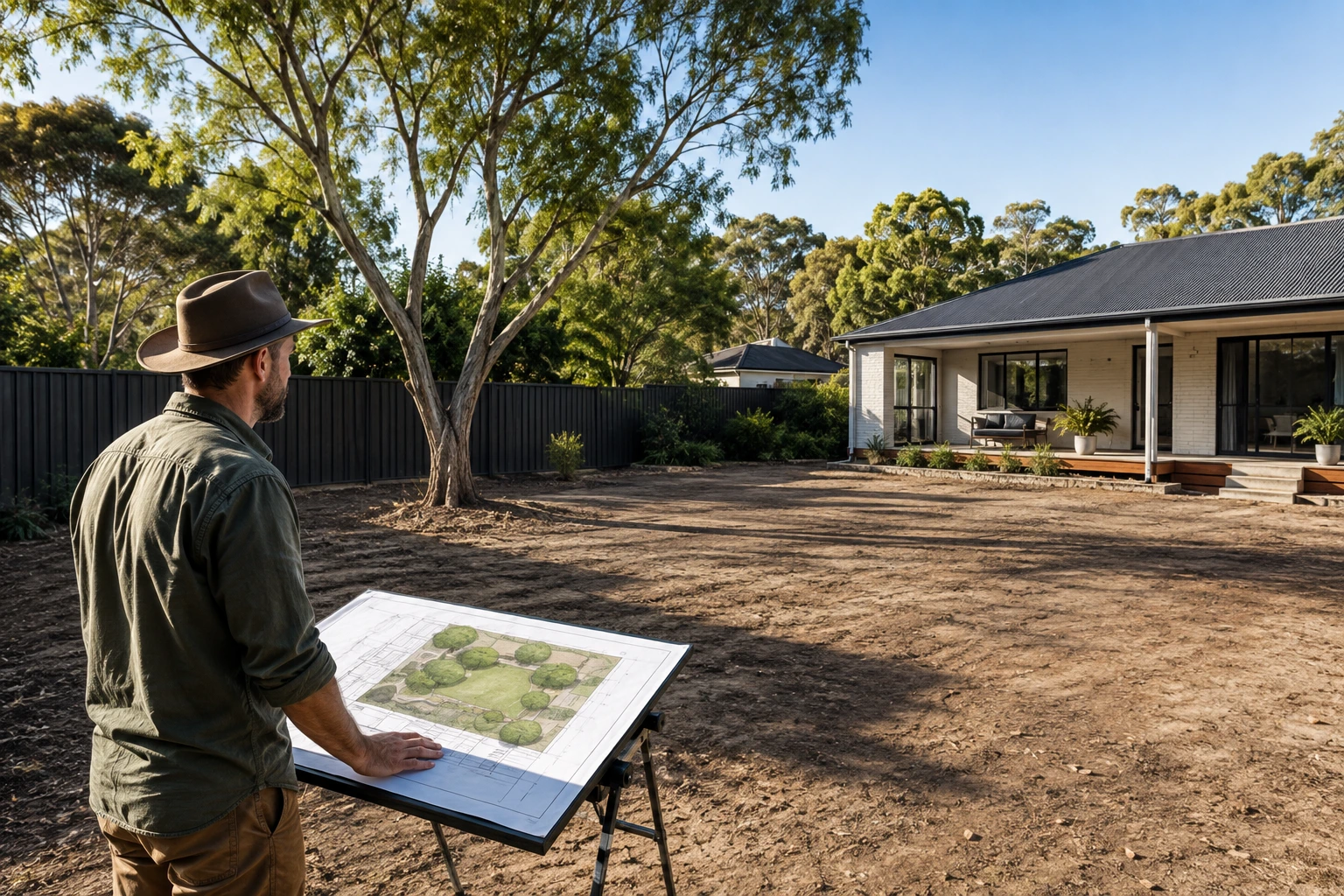
A proper site assessment checks the soil, drainage, underground utilities, and access before any digging starts. Without one, issues that could have been planned around tend to surface mid-construction and stall the project.
It could be soil that looks stable on the surface but requires extra excavation once work begins. Or a drainage problem that forces part of the site to be regraded before paving can continue. Even an unexpected utility line can stop excavation until it’s located and protected.
A site assessment won’t catch everything, but it gives your landscaper accurate information to plan around problems before they affect the schedule.
Underestimating Permits and Approvals
A missing permit can shut down a landscaping project mid-build. Yet many homeowners never check what approvals they need because they assume permits only apply to major building work. In practice, that’s not always the case.
Depending on your property and location, a range of landscaping works can trigger a development application or building approval, including:
- Retaining walls over a certain height
- Driveways and crossovers
- Structures like pergolas, sheds, or outdoor kitchens
- Properties in flood, bushfire, or heritage overlays
The rules around each of these vary depending on where your property sits. In Brisbane, for example, projects are generally assessed through Brisbane City Council.
Meanwhile, those in regional Queensland go through the relevant local council. Requirements and approval timeframes vary between councils, so it’s worth checking your local authority before finalising your project schedule.
Also, you can’t legally start work until approval comes through. If you do, the council can issue a stop work order and require parts of the build to be pulled down and redone. We’ve seen projects lose weeks this way, simply because the application wasn’t lodged before work started.
Ignoring Seasonal Timing and Material Availability
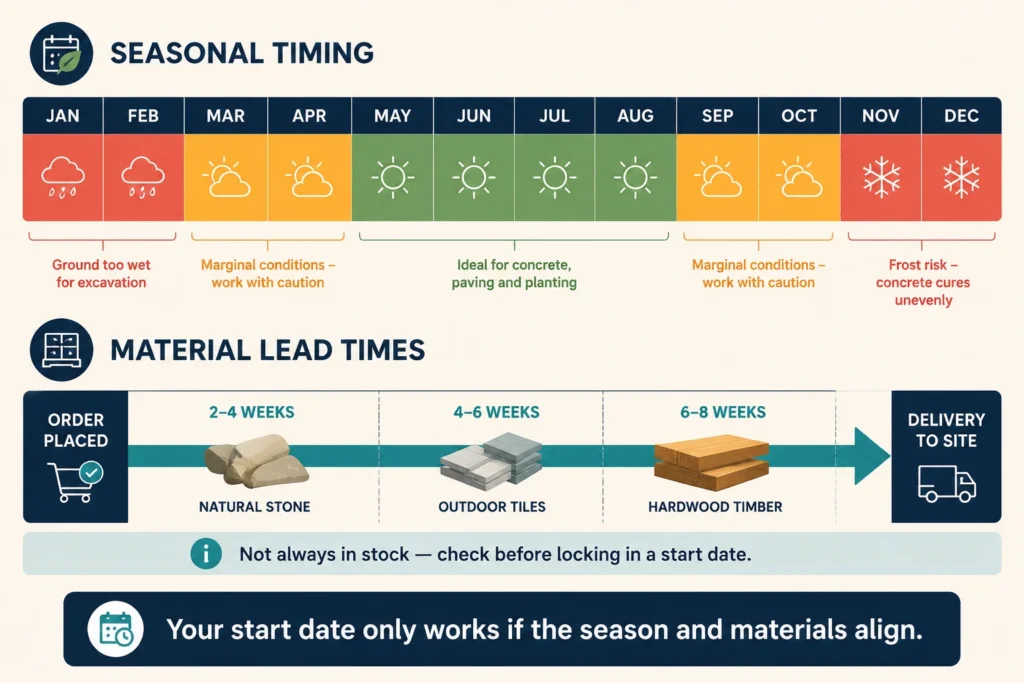
When planning a landscaping project, it’s easy to overlook seasonal timing and material availability, especially if it’s your first time. You’re excited to get started, so choosing the earliest possible start date feels like the obvious next step.
The problem is that concrete, paving, and freshly planted garden beds aren’t exactly rain-friendly. After heavy rain, the ground may be too wet for excavation and newly poured concrete can crack or cure unevenly.
Material availability follows a similar pattern. Natural stone, outdoor tiles, and hardwood timber aren’t always in stock. And getting those materials delivered can take four to eight weeks if they’re not in stock.
Plant selection works the same way. Some species are only available during certain planting windows, and others simply won’t take root if planted outside their ideal season. Checking availability before locking in a start date keeps the schedule realistic from the beginning.
Setting a Budget Without a Contingency
Say you’re halfway through a backyard renovation and the excavation crew hits rock that wasn’t visible on the surface. Removing it costs extra, and it wasn’t in the original quote. If there’s no buffer in your budget, the project stops while you work out where the money is coming from. That’s what a contingency is: a set amount reserved specifically for costs that weren’t part of the original plan.
So always set aside a contingency before approving any quotes. The amount depends on your project size and what it involves. From our experience working with homeowners across Brisbane, 10–15% of the total budget is usually enough to cover most issues without stalling the project.
A Simple Landscaping Project Planning Process to Avoid Delays
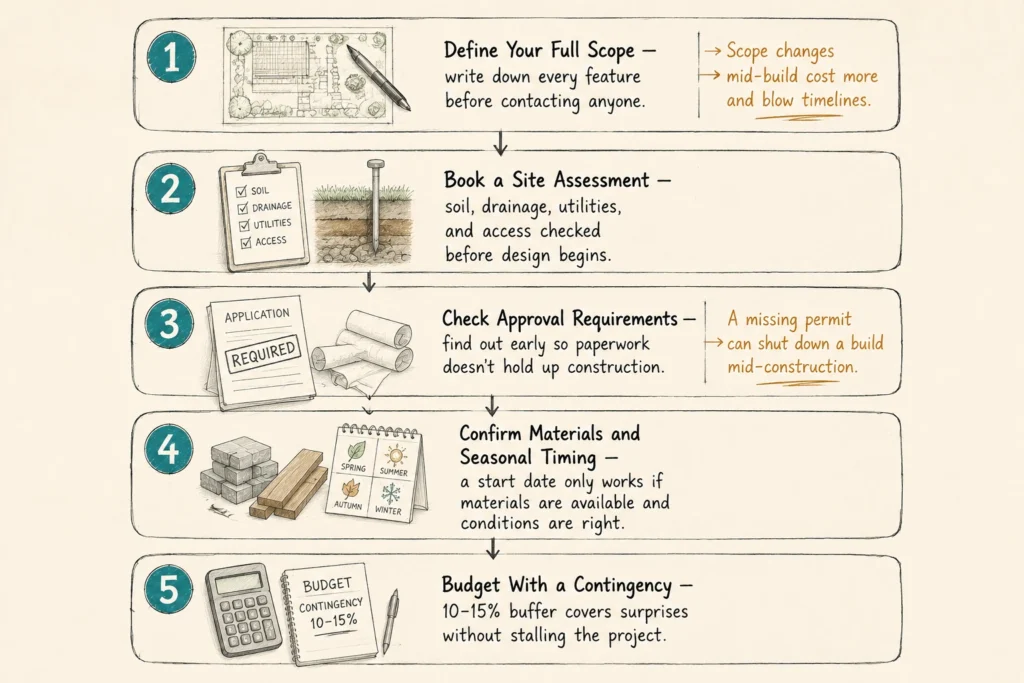
Every mistake in this article comes down to one thing: the order in which decisions get made. Use this as a quick reference before your project begins:
- Define Your Full Scope First: Write down every feature you want, including your patio, garden beds, and alfresco area, before contacting anyone.
- Book a Site Assessment Early: Your design will be far more accurate when it’s based on actual soil, drainage, and site conditions.
- Check Your Approval Requirements: Not every project needs council approval, but finding out early prevents paperwork from holding up construction.
- Confirm Materials and Seasonal Timing: A start date only works if your materials are available and the season is right for planting.
- Budget With a Contingency: Leave room for unexpected costs so one surprise doesn’t bring the project to a halt.
This short list covers the planning gaps that cause the majority of landscaping hold-ups. And most homeowners only need to run through it once before their first meeting with a contractor.
Planning Is the Foundation of Every Successful Landscape Project
Landscaping delays rarely come out of nowhere. They almost always trace back to a planning decision that was skipped or left too late. If you’re not sure where to start, the checklist in the previous section covers the steps in the right order.
Planning a garden renovation? The team at Design Martus can help you define the scope, assess your site, and build a realistic timeline from the outset. Get in touch today to discuss your project.
Frequently Asked Questions
The following FAQs cover some of the most common questions homeowners have when planning a landscaping project.
How long does landscape construction typically take?
Most residential landscape construction projects take four to twelve weeks, depending on the scope, size, and complexity of the design. Larger projects involving drainage systems, retaining walls, or outdoor kitchens can run longer, especially if council approvals are required.
Does landscape design consider indoor and outdoor flow?
Yes. A good landscape design takes into account how your outdoor spaces connect to your interiors, including sightlines, lighting, and access points. This helps create a natural transition between inside and outside.
How do I choose the right trees and vegetation for my garden?
Choose trees and plants suited to your local climate, soil type, and available space. Also consider how much shade they’ll create as they mature and how much ongoing maintenance they’ll need to stay healthy and look their best.
Can I include a custom design for features like a pool or outdoor kitchen?
Yes. Custom design allows you to plan features like pool areas, outdoor kitchens, and alfresco spaces around your specific surroundings, style preferences, and budget, rather than working from a standard template.
What does ongoing maintenance involve after a landscape project is completed?
Ongoing maintenance typically includes lawn care, mulching, pruning, irrigation checks, and weed control. The frequency depends on your plant selection and the size of your garden, but most properties need attention at least monthly.